Crispy Smashed Potatoes with Whipped Feta and Chimichurri
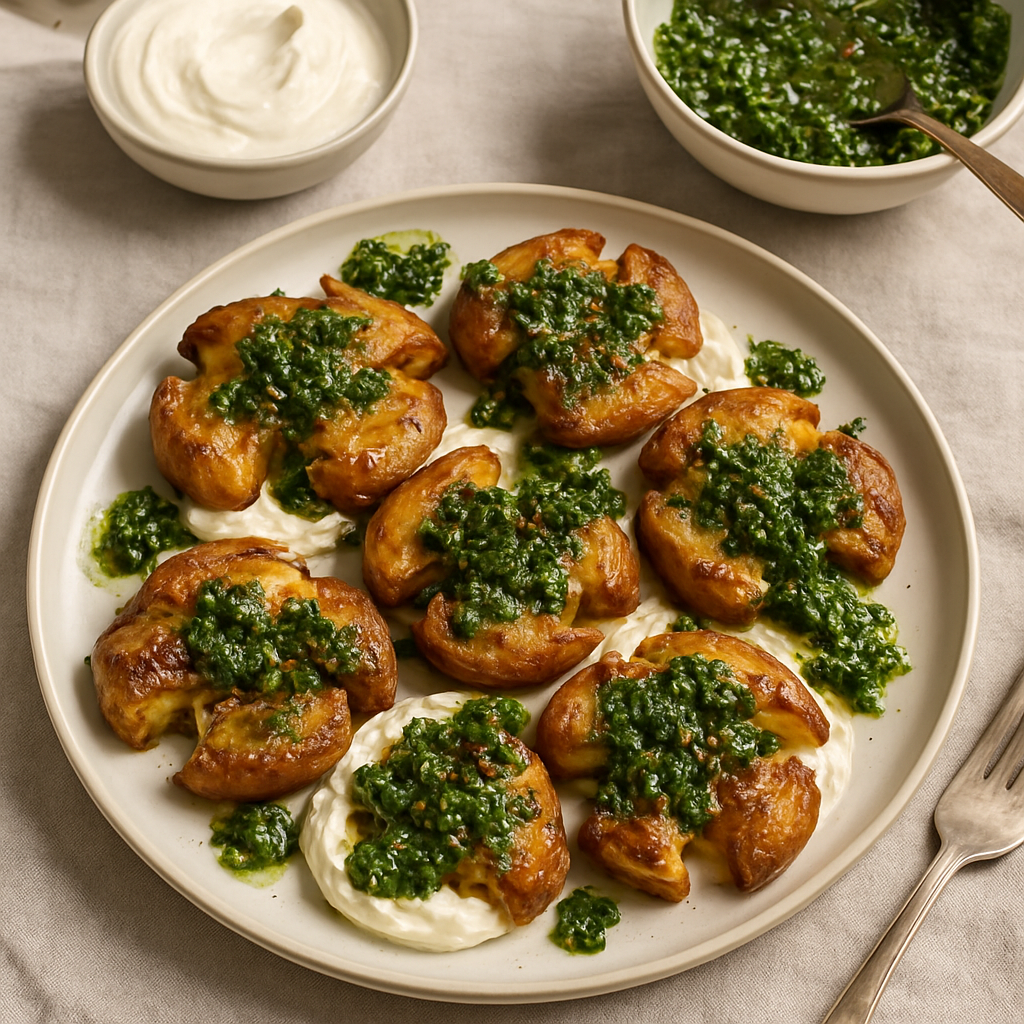
# Crispy Smashed Potatoes with Whipped Feta and Chimichurri
There's a moment when you pull a tray of smashed potatoes out of the oven — golden, craggly, impossibly crispy — and you realise this is exactly what a potato was always meant to be. This recipe takes that already-brilliant base and layers it with cool, whipped feta and a punchy herb chimichurri that makes the whole thing feel restaurant-worthy with very little effort.
What Is the Smashed Potato, Exactly?
If you haven't encountered smashed potatoes before, here's the idea: you boil small potatoes until tender, then press them flat on a baking tray and roast them at high heat until the edges turn shatteringly crispy while the inside stays fluffy.
It's a different beast from a roast potato. The smashing dramatically increases the surface area exposed to the hot oven, which means more of the Maillard reaction — the chemical process responsible for golden, flavourful browning — and far more crunch per bite.
The technique has been around for years in various forms, but it's had a proper resurgence recently, and for good reason. It's forgiving, endlessly customisable, and produces results that look like you've tried much harder than you have.
Why This Flavour Combination Works
Potatoes on their own are delicious but relatively neutral. They need fat, salt, and acidity to really sing — and this recipe delivers all three.
Whipped feta brings creaminess, salt, and a gentle tang that contrasts beautifully with the crispy potato. Blended with a little cream cheese or Greek yoghurt, it becomes almost mousse-like — light enough that it doesn't weigh the dish down.
Chimichurri is the component that ties everything together. This Argentinian herb sauce — made from parsley, garlic, red wine vinegar, olive oil, and chilli — cuts through the richness of the feta and adds a bright, grassy freshness that makes each bite feel alive. The vinegar is key: it lifts the whole dish.
Together, you get crunch, creaminess, heat, herb, and acid — a genuinely complete mouthful.
The Recipe
Serves: 3–4 as a side, 2 as a main
Time: 55 minutes (15 active)
### Ingredients
For the potatoes: - 700g baby or new potatoes - 3 tbsp olive oil - 1 tsp garlic granules - 1 tsp smoked paprika - Salt and black pepper
For the whipped feta: - 200g feta cheese - 100g Greek yoghurt (full-fat works best) - 1 tbsp olive oil - Black pepper to taste
For the chimichurri: - 30g fresh flat-leaf parsley, finely chopped - 2 garlic cloves, minced - 1 tsp dried oregano - ½ tsp chilli flakes (adjust to taste) - 3 tbsp red wine vinegar - 5 tbsp extra virgin olive oil - Salt to taste
### Method
1. Preheat your oven to 220°C (200°C fan). Boil the potatoes in well-salted water for 18–20 minutes until completely tender — a knife should slide in with no resistance.
2. Drain and leave to steam-dry for 5 minutes. Arrange on a large baking tray with plenty of space between each potato.
3. Use the bottom of a mug, a glass, or a fork to press each potato down until it's roughly 1–1.5cm thick. Don't be too precious about it — the rougher the edges, the crispier the result.
4. Drizzle generously with olive oil, then season with garlic granules, smoked paprika, salt, and pepper. Make sure the oil gets into all the craggy bits.
5. Roast for 30–35 minutes until deeply golden and crispy. Resist the urge to move them around — let them sit and develop a crust.
6. While the potatoes roast, blend the feta, Greek yoghurt, and olive oil together with a hand blender or food processor until smooth and creamy. Season with black pepper.
7. Mix all chimichurri ingredients together in a small bowl. Taste and adjust — more vinegar for sharpness, more chilli for heat, more oil if it feels too punchy.
8. To serve, spread the whipped feta across a large plate or platter, pile the crispy potatoes on top, and spoon over the chimichurri generously. Finish with an extra drizzle of olive oil if you like.
What Makes This Work Nutritionally
This dish is more balanced than it might appear at first glance.
Potatoes are genuinely nutritious. A medium potato provides around 3g of fibre, a decent hit of potassium, and useful amounts of vitamin C and B6. They're also one of the most satiating foods per calorie — research published in the European Journal of Clinical Nutrition found potatoes ranked highest on the satiety index compared to a wide range of other common foods.
Feta is relatively lower in fat than many cheeses — around 21g per 100g — and provides calcium, protein, and phosphorus. Whipping it with Greek yoghurt cuts the overall fat content while boosting the protein, making this topping genuinely useful if you're tracking macros.
Olive oil and the chimichurri herbs bring their own benefits: the monounsaturated fats in olive oil are well-studied for their role in heart health, and parsley is a surprisingly rich source of vitamin K and folate. That said, the real reason to eat this dish is that it's excellent — the nutrition is a bonus.
The macros per serving (as a side for 4) come in at roughly 320–370 kcal, 8–10g protein, 35–40g carbs, and 16–18g fat, though this will shift depending on how heavy-handed you are with the oil (no judgement — it's worth it).
What the Evidence Shows
The way potatoes have been treated in popular nutrition discourse over the last two decades hasn't been particularly fair to them.
Low-carb diet culture painted potatoes as something to avoid, but the evidence doesn't really support that framing for most people. A 2022 review in Nutrients found no significant association between potato consumption and increased risk of type 2 diabetes when potatoes were consumed as part of a varied diet — it was preparation method (deep frying, heavy toppings) and overall dietary pattern that mattered, not the potato itself.
Resistant starch is worth a mention here too. Boiling and then cooling potatoes — which you're doing in this recipe while they steam-dry — increases their resistant starch content, a type of carbohydrate that acts more like fibre in the body, feeding gut bacteria and slowing glucose absorption. Reheated potatoes retain this benefit as well, so leftovers from this recipe are arguably better for your gut than freshly made ones.
The chimichurri also earns its place beyond flavour. Parsley contains flavonoids and carotenoids with antioxidant activity, and the garlic in chimichurri contains allicin, which has been studied for its antimicrobial and anti-inflammatory properties — though you'd need to eat quite a lot consistently to see meaningful clinical effects. Still, flavour and function in the same spoonful is never a bad thing.
Variations Worth Trying
This recipe is a strong base that adapts well.
Make it vegan: Swap the feta and yoghurt for blended silken tofu with a squeeze of lemon, a tablespoon of white miso, and a drizzle of olive oil. It sounds like a stretch but it works — the miso brings the saltiness and umami that feta normally provides.
Add protein to make it a main: Serve with crispy chickpeas roasted alongside the potatoes, a soft-boiled egg, or flaked hot-smoked salmon laid across the top.
Swap the chimichurri: A simple salsa verde (capers, anchovies, lemon, herbs) works beautifully here, as does a harissa yoghurt drizzle for something with more warmth.
Different potatoes: Baby Maris Pipers or Charlottes are ideal, but any waxy-to-medium variety works. Floury potatoes will fall apart more when smashed — which some people prefer for maximum crispiness.
Practical Takeaways
- Steam-dry your potatoes properly before smashing — excess moisture is the enemy of crispiness.
- Don't crowd the tray. If the potatoes are touching, they'll steam rather than roast. Use two trays if needed.
- Make the chimichurri ahead. It improves with 30 minutes of resting as the flavours meld.
- Whipped feta keeps in the fridge for 3–4 days and works brilliantly as a dip, a sandwich spread, or a topping for roasted vegetables.
- Leftovers reheat well in an air fryer at 200°C for 6–8 minutes to restore the crispiness.
---
If you want to fit dishes like this into a structured meal plan without doing the macro maths yourself, Macrology generates macro-perfect meal plans in seconds — [https://macrology.app/signin](https://macrology.app/signin)
Macrology tip: Building a week of meals around recipes like this — satisfying, flavourful, and genuinely nutritious — is exactly what Macrology is designed for. Log in, set your targets, and let the app do the heavy lifting.
Want meals like this planned to your exact macros?
Macrology generates a personalised meal plan in seconds — breakfast, lunch, dinner and snacks, all hitting your daily targets.
Start your free 14-day trial