Crispy Skin Trout with Brown Butter, Almonds and Wilted Spinach
# Crispy Skin Trout with Brown Butter, Almonds and Wilted Spinach
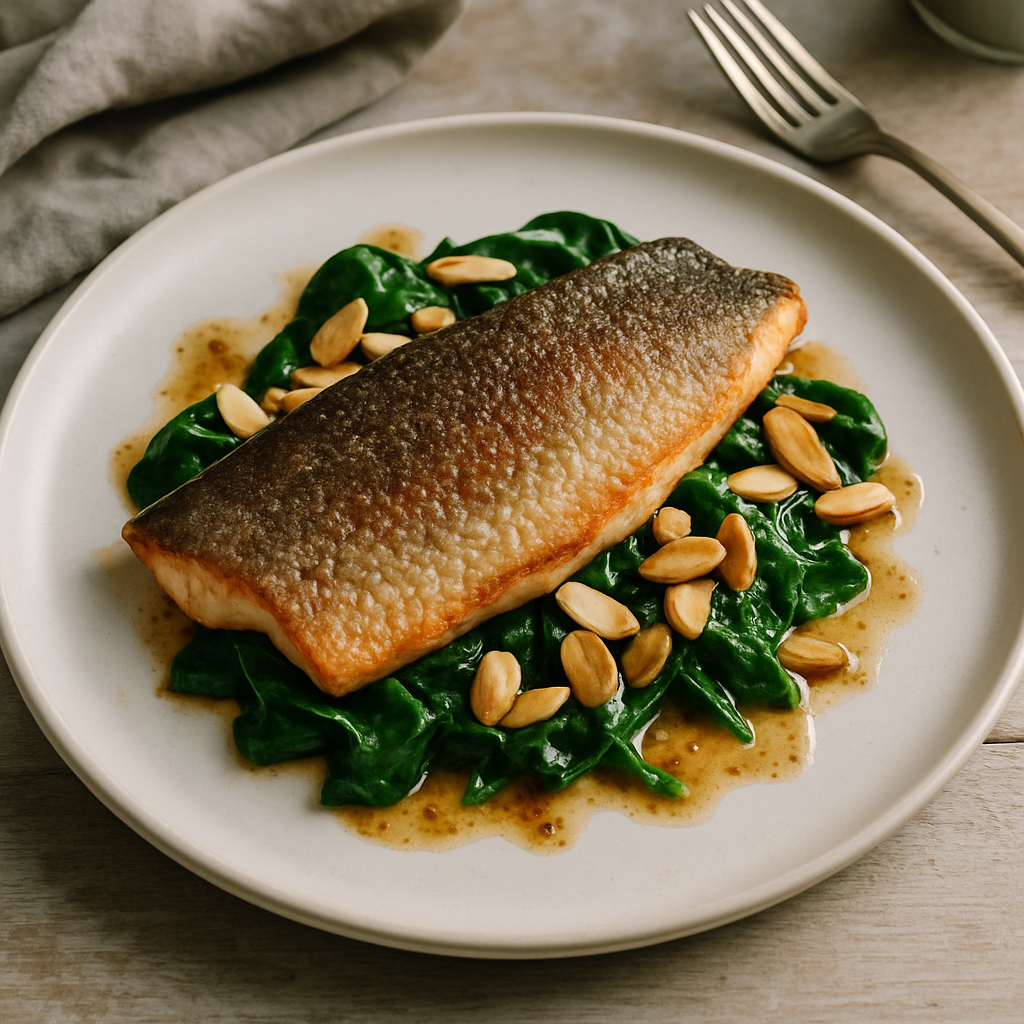
There's something quietly brilliant about a pan-fried trout fillet. In under fifteen minutes, you've got a restaurant-quality meal on the table — crispy, golden skin, tender flesh, and enough flavour to make you wonder why you ever ordered a takeaway.
This recipe leans into one of the great classic combinations: rich brown butter, toasted almonds, and iron-packed spinach. It's simple, it's fast, and it's the kind of dinner that genuinely delivers on nutrition without making any fuss about it.
What You'll Need (Serves 2)
For the trout:
- 2 trout fillets, skin on (around 150–180g each)
- 1 tbsp olive oil or a neutral oil like rapeseed
- Salt and black pepper
For the brown butter and almonds:
- 50g unsalted butter
- 40g flaked almonds
- Juice of half a lemon
- A small handful of flat-leaf parsley, roughly chopped
For the spinach:
- 200g baby spinach
- 1 garlic clove, thinly sliced
- 1 tsp olive oil
- Salt and a pinch of nutmeg
How to Make It
Step 1 — Prep the fish. Pat your trout fillets completely dry with kitchen paper. This is the single most important step for achieving crispy skin. Any moisture left on the surface will steam the fish rather than sear it. Season generously on both sides with salt and pepper.
Step 2 — Get the pan seriously hot. Place a non-stick or stainless-steel frying pan over a medium-high heat and add the oil. You want the oil shimmering before the fish goes in. A cold pan is the enemy of crispy skin.
Step 3 — Cook skin-side down. Lay the fillets in the pan skin-side down and press gently with a spatula for the first 30 seconds to prevent the skin from curling. Cook for 3–4 minutes without moving them. The skin should be deeply golden and pulling away from the pan easily before you flip. Flip, cook for just 60–90 seconds on the flesh side, then remove from the heat. Trout is a thin, delicate fish — it carries over a little, so don't be tempted to over-cook it.
Step 4 — Brown the butter. In a separate small pan (or the same pan after removing the fish), melt the butter over a medium heat. Keep swirling it. It'll foam, then the foam will settle, and you'll start to see golden-brown specks forming at the bottom. That's the milk solids caramelising — that's your flavour. The moment it smells nutty and looks amber, add the flaked almonds and toss them for about 60 seconds until lightly toasted. Remove from the heat and add the lemon juice. It'll spit a little, so stand back. Stir in the parsley.
Step 5 — Wilt the spinach. While the butter browns, warm a splash of oil in a separate pan over medium heat. Add the sliced garlic and cook for 30 seconds until fragrant but not coloured. Tip in the spinach and toss until just wilted — about 90 seconds. Season with salt and a tiny grate of nutmeg.
Step 6 — Plate it up. Lay the spinach as a base, place the trout on top skin-side up, and spoon the brown butter and almonds generously over everything. Serve immediately.
What Makes This Work Nutritionally
This dish is a strong performer across all three macronutrients, and the combination isn't accidental.
Protein is the headline here. A 170g trout fillet delivers around 30–35g of high-quality complete protein, meaning it contains all nine essential amino acids your body can't produce itself. Protein is central to muscle repair, satiety, and a whole host of metabolic processes.
Fats come from three distinct sources in this recipe. Trout is naturally rich in omega-3 fatty acids, particularly EPA and DHA — the long-chain forms that are most readily used by the body. These are the same fatty acids associated with heart health, reduced inflammation, and brain function. The butter adds saturated fat, yes, but in the context of a balanced dish and a reasonable portion, that's not a concern worth losing sleep over. The almonds bring monounsaturated fats and a dose of vitamin E alongside them.
The spinach is doing more work than it might look like. Wilted spinach is a concentrated source of folate, magnesium, iron, and vitamin K. The fat in this recipe also matters here — vitamins A, E, and K are fat-soluble, meaning your body absorbs them far more efficiently when eaten alongside dietary fat. Eating spinach with butter isn't indulgent; it's actually just good sense.
A rough macro breakdown per serving (with 150g fillet): approximately 38g protein, 32g fat, 5g carbohydrates.
What the Evidence Shows
Trout is one of the most nutritionally dense freshwater fish available in the UK, and it's also one of the more sustainable options compared to wild-caught Atlantic salmon.
Research consistently supports omega-3 intake for cardiovascular health. A 2021 analysis published in the European Heart Journal found that higher circulating levels of EPA and DHA were associated with meaningfully lower rates of major cardiovascular events. The British Heart Foundation recommends eating oily fish at least twice a week, and trout counts as oily.
The almonds in this recipe aren't just textural. A 2020 meta-analysis in the Journal of Nutritional Science found that regular almond consumption was associated with reductions in LDL cholesterol and improvements in overall lipid profiles. Even a small 40g portion provides around 8–9g of protein and a meaningful amount of vitamin E, a fat-soluble antioxidant that's actually quite hard to get enough of from diet alone.
Brown butter also has something going for it beyond flavour. When butter is browned, the milk solids caramelise through the Maillard reaction — the same chemical process that makes bread crust, roasted coffee, and seared steak taste so compelling. It doesn't change the nutritional profile significantly, but it does make a modest amount of butter deliver an outsized amount of flavour, which means you get more from less.
Common Mistakes (And How to Avoid Them)
Not drying the fish. Already mentioned, but worth repeating — moisture is the enemy of crispiness. Dry the skin thoroughly.
Moving the fish too early. When fish skin is ready to release, it will. If you try to lift it and it resists, leave it another 30–60 seconds. Forcing it tears the skin.
Over-cooking the flesh. Trout goes from perfect to chalky faster than most fish. The flesh should look just opaque when you flip it, and the residual heat will carry it the rest of the way.
Burning the butter. Brown butter has a small window between nutty and bitter. Don't walk away from the pan, and have your lemon juice ready to add the moment it hits the right colour.
What to Serve It With
This dish stands on its own beautifully, but if you want to bulk it out or add carbohydrates, a few options work particularly well.
New potatoes — simply boiled with a little salt, they're a natural companion without overwhelming the dish.
A green salad with a sharp vinaigrette — the acidity cuts through the richness of the brown butter nicely.
Crusty sourdough — practical for mopping up the brown butter left on the plate, which you absolutely will want to do.
If you're tracking macros and want to add carbohydrates in a more measured way, a portion of cooked pearl barley or quinoa stirred through with the spinach works very well.
Practical Takeaways
- Dry the skin before cooking — no exceptions.
- Use medium-high heat and a proper non-stick or well-seasoned pan.
- Watch the butter — it goes from perfect to burnt in seconds, so stay close.
- Don't skip the lemon — the acidity balances the richness of the butter and brings the whole dish together.
- This recipe hits around 38g protein per serving, making it a strong option for anyone prioritising protein intake at dinner.
- Aim to eat oily fish like trout at least twice a week to benefit from consistent omega-3 intake.
---
If you want meal plans built around high-protein, nutritionally balanced dinners like this one, Macrology generates macro-perfect meal plans in seconds — https://macrology.app/signin
> Macrology tip: Add this recipe to your weekly rotation and let Macrology balance the rest of your day's meals around it automatically. Whether you're hitting a protein target or just trying to eat a bit more oily fish, the app does the maths so you don't have to.
Want meals like this planned to your exact macros?
Macrology generates a personalised meal plan in seconds — breakfast, lunch, dinner and snacks, all hitting your daily targets.
Start your free 14-day trial