Crispy Skin Salmon with Crushed Peas, Capers and Dill Crème Fraîche
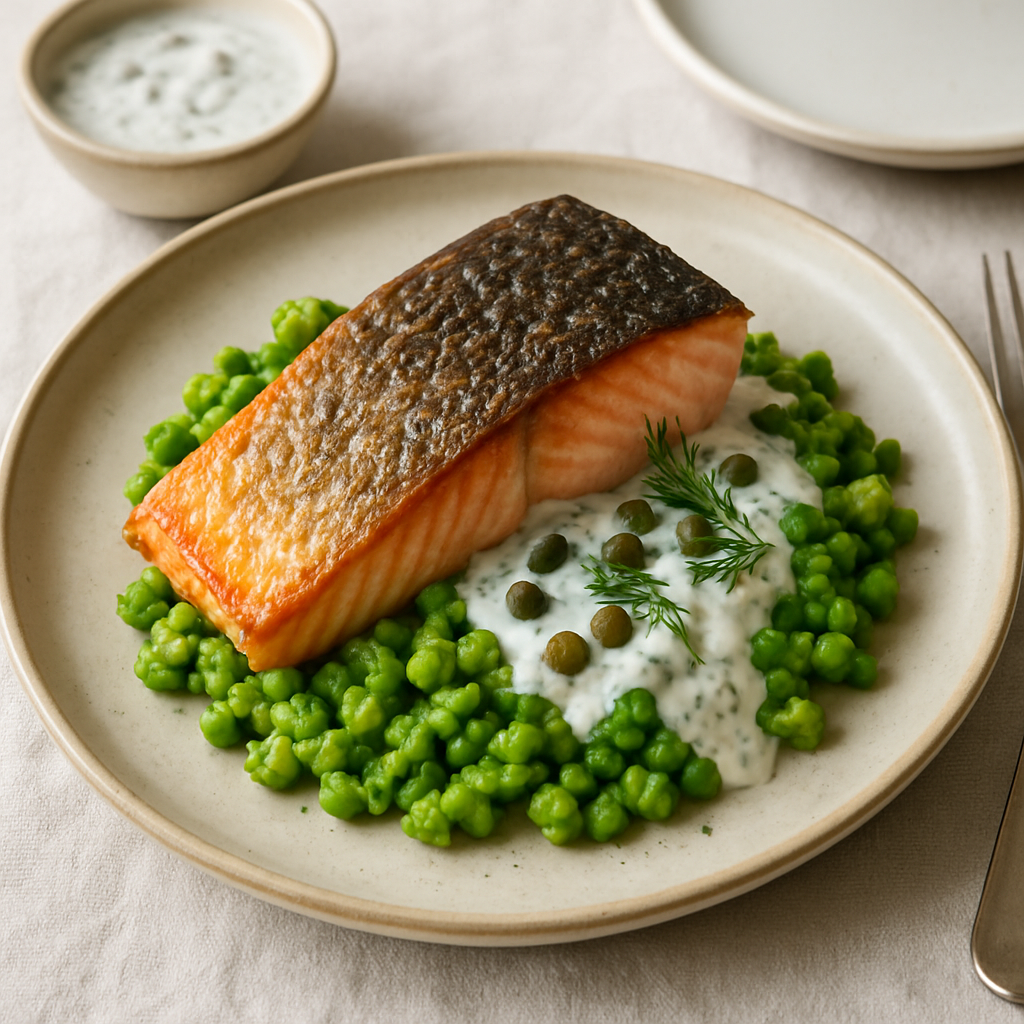
# Crispy Skin Salmon with Crushed Peas, Capers and Dill Crème Fraîche
There's a particular kind of satisfaction that comes from getting salmon skin genuinely crispy — that glass-like crunch giving way to tender, flaky flesh underneath. It's the kind of result you'd expect from a restaurant, but it's entirely achievable at home with a few simple principles.
This recipe pairs that crispy-skinned salmon with crushed peas, briny capers, and a cool dill crème fraîche that cuts right through the richness. It's fast enough for a weeknight, impressive enough for guests, and lands in a genuinely satisfying macro range without any compromise on flavour.
---
Why pan-frying salmon is worth mastering
Pan-frying is one of the best methods for salmon because it gives you control over two things at once: a crispy, rendered skin and a gently cooked interior that stays moist rather than turning chalky.
The key is starting with a hot pan and dry skin. Moisture is the enemy of crispiness — it creates steam, which prevents the Maillard reaction (the browning process responsible for that golden crust) from happening properly. Pat the skin thoroughly dry before it goes anywhere near the pan.
Most of the cooking also happens skin-side down, which might feel counterintuitive. Leaving the salmon skin-side down for the majority of the cooking time renders the fat from the skin gradually and lets the heat work its way up through the flesh. You end up with crispy skin and a perfectly cooked top layer with very little effort.
---
What makes this work nutritionally
Salmon is one of the most nutrient-dense proteins you can cook with. A standard 150g fillet provides around 30–35g of protein, making it a genuinely substantial meal base rather than a light bite.
More notably, salmon is one of the richest dietary sources of omega-3 fatty acids — specifically EPA and DHA, the long-chain forms that the body can use directly. Most adults in the UK fall well short of recommended omega-3 intake, so a couple of salmon portions per week makes a meaningful difference.
The crushed peas add more than colour. Peas are a surprisingly good source of plant-based protein (around 5–6g per 100g cooked) and provide fibre that helps with satiety and gut health. Capers are low in calories but high in flavour and contain small amounts of antioxidants including quercetin and kaempferol. The crème fraîche contributes a modest amount of fat and calcium — and full-fat versions are perfectly reasonable here, adding flavour and helping the sauce hold together.
---
What the evidence shows
The case for oily fish like salmon in the diet is well-established. The NHS recommends eating at least two portions of fish per week, one of which should be oily, partly because of the cardiovascular benefits associated with omega-3 fatty acids.
Research published in journals including the American Journal of Clinical Nutrition has consistently linked higher omega-3 intake with reduced markers of inflammation and improved heart health outcomes. A 2021 Cochrane review found that increased omega-3 intake was associated with a small but meaningful reduction in the risk of cardiovascular events.
Beyond omega-3s, salmon is a reliable source of vitamin D — a nutrient that's notoriously difficult to get from food alone, especially in the UK where sunlight exposure is limited for much of the year. A 150g serving of salmon can provide around 100% of the recommended daily intake of vitamin D. It's also rich in B vitamins, particularly B12, and selenium, which supports thyroid function and immune health.
The dill in this recipe isn't just garnish, either. Dill contains compounds including carvone and limonene that have shown mild antimicrobial properties in research settings, though the quantities in cooking are modest. It's not a health food in its own right, but it's a useful herb with genuine flavour complexity.
---
The recipe
Serves: 2 Time: 25 minutes
Ingredients
- 2 salmon fillets (around 150g each), skin on
- 200g frozen peas
- 1 tbsp olive oil
- 1 tbsp unsalted butter
- 2 tbsp capers, roughly chopped
- 1 small garlic clove, finely grated
- 150g crème fraîche
- A small bunch of fresh dill, roughly chopped
- Juice of half a lemon
- Salt and black pepper
Method
Start by making the dill crème fraîche. Mix the crème fraîche with the chopped dill, lemon juice, and a pinch of salt. Taste and adjust — it should be fresh, slightly sharp, and herby. Set aside in the fridge.
Cook the peas in boiling salted water for 2–3 minutes until tender, then drain. Add the butter and capers to the peas and crush roughly with a fork — you want texture, not a smooth purée. Season with black pepper and a squeeze of lemon, and keep warm.
For the salmon, pat the skin completely dry with kitchen paper. Season the skin side lightly with salt. Heat the olive oil in a heavy-bottomed frying pan (cast iron or stainless steel works well) over a medium-high heat until it shimmers.
Place the salmon fillets skin-side down and press gently for the first 10–15 seconds to ensure full contact with the pan. Don't move them. Cook skin-side down for 5–6 minutes, until the skin is deeply golden and the flesh has turned opaque about two-thirds of the way up the fillet.
Flip the salmon and cook for a final 60–90 seconds on the flesh side. The centre should still have a very slight give — it will continue to cook off the heat. Remove from the pan and rest for a minute or two.
To serve: spoon the crushed peas onto plates, place the salmon on top skin-side up, and add a generous dollop of the dill crème fraîche alongside. A few extra fronds of dill and a wedge of lemon to finish.
---
Common mistakes and how to avoid them
The skin sticks. This usually happens because the pan wasn't hot enough before the fish went in, or the fish was moved too soon. Let the pan fully preheat and resist the urge to lift the fillet for the first few minutes — it will release naturally once the skin has crisped.
The skin goes soft after cooking. Covering the salmon or resting it skin-side down on a plate traps steam and reverses your hard work. Rest it skin-side up on a warm plate so the air can circulate.
The flesh is dry. Overcooking is the most common salmon mistake. Salmon continues to cook after it leaves the heat, so pulling it off just before it looks fully done is usually the right call. A small amount of translucency in the centre is fine and means the fish will be moist all the way through.
---
Practical takeaways
- Dry the skin thoroughly — kitchen paper, then a minute or two uncovered in the fridge if you have time
- Hot pan, cold fish — starting with a properly preheated pan is more important than the heat level you cook at
- Don't rush the flip — skin-side down for the majority of the cooking time, and only flip once
- Crush the peas, don't purée them — the texture contrast matters here
- Make the crème fraîche ahead — it keeps in the fridge for a day or two and the flavour improves as it sits
- Use the full-fat crème fraîche — lower-fat versions can split when they meet the warm fish
---
If you want macro-perfect meal plans that include recipes like this one — mapped to your protein, fat, and carb targets — Macrology generates them in seconds: https://macrology.app/signin
> Macrology tip: Log this meal in Macrology and the app will balance the rest of your day's meals around it automatically — so you hit your targets without counting a thing.
Want meals like this planned to your exact macros?
Macrology generates a personalised meal plan in seconds — breakfast, lunch, dinner and snacks, all hitting your daily targets.
Start your free 14-day trial