Crispy Skin Mackerel with Pickled Fennel, New Potatoes and Dill Crème Fraîche
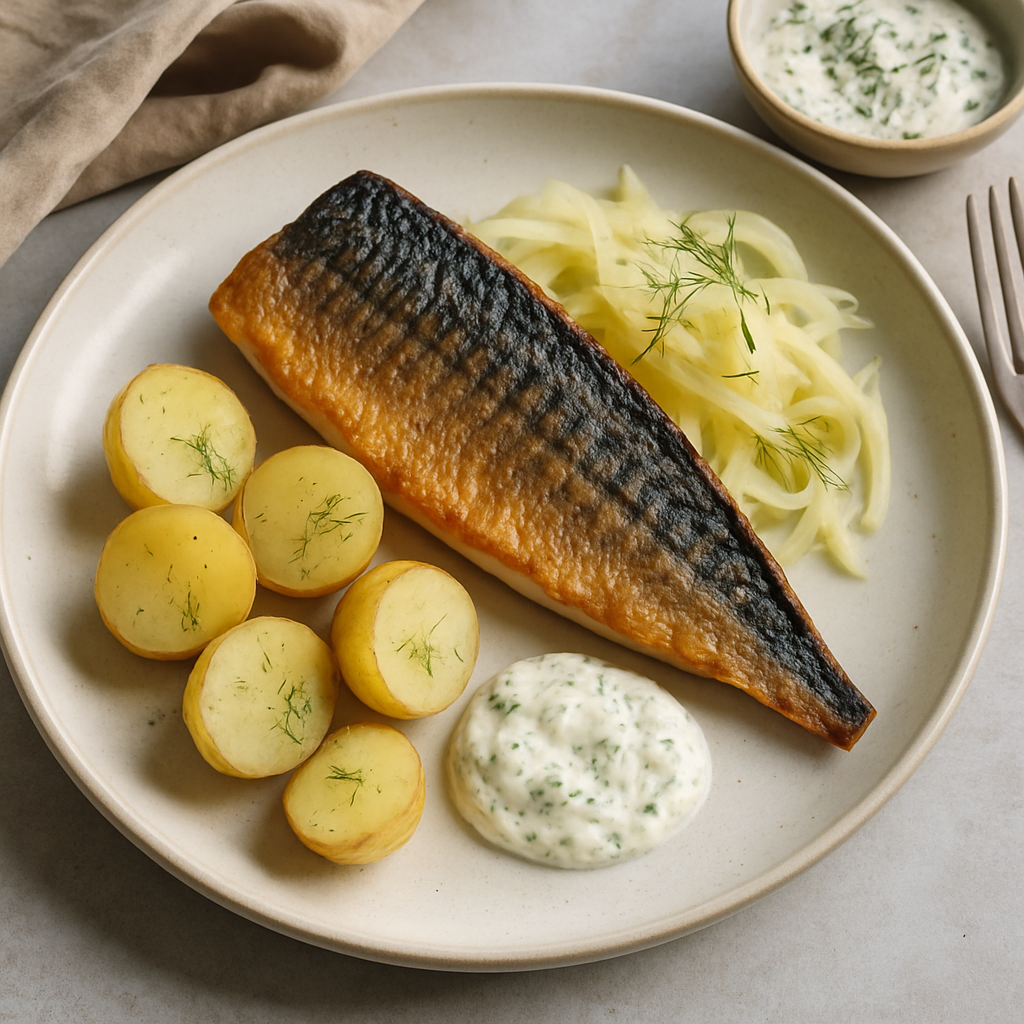
# Crispy Skin Mackerel with Pickled Fennel, New Potatoes and Dill Crème Fraîche
There's a moment when fish skin hits a properly hot pan — that sharp sizzle, the way it contracts and crisps almost immediately — that tells you dinner is going to be good. Mackerel is one of those ingredients that rewards very little fuss with a tremendous amount of flavour, and this recipe is built around exactly that idea.
Why Mackerel Deserves a Regular Spot on Your Plate
Mackerel is one of the most nutritionally dense fish you can buy in the UK, and it's also one of the most affordable. It's rich in omega-3 fatty acids, provides a substantial hit of protein, and brings genuine flavour to the table — bold, oily, and deeply savoury in a way that works brilliantly against something sharp and acidic.
The combination here — crispy skin fillets, quick-pickled fennel, waxy new potatoes, and a cool dill crème fraîche — is classic in structure but really satisfying to eat. Every element has a purpose, and together they balance each other in a way that feels considered without being complicated.
What the Evidence Shows
Oily fish like mackerel is genuinely worth eating regularly. The NHS recommends eating at least two portions of fish per week, with one of those being oily. That guidance is based on consistent evidence linking oily fish consumption to cardiovascular health, thanks largely to the EPA and DHA omega-3 fatty acids found in species like mackerel, salmon, sardines, and herring.
Mackerel is also an excellent source of vitamin B12, which supports nerve function and the formation of red blood cells, as well as selenium, iodine, and vitamin D — a nutrient many people in the UK are deficient in, particularly through winter months. A single fillet can provide a meaningful contribution to your daily protein needs, typically around 20–25g depending on the size.
It's also worth noting that mackerel is considered one of the more sustainably sourced options available in UK supermarkets and fishmongers, particularly Atlantic mackerel caught by UK vessels. That makes it an easy choice to reach for regularly.
What Makes This Work Nutritionally
The dish has been built with macros in mind, and the balance is genuinely solid.
Protein comes primarily from the mackerel fillets — two fillets will typically deliver around 40–45g of protein for the meal. The crème fraîche contributes a small additional amount.
Carbohydrates come from the new potatoes, which are a good source of slow-release energy and also provide potassium and vitamin C. New potatoes specifically have a lower glycaemic index than floury varieties, meaning they're digested more gradually.
Fat in this dish is predominantly unsaturated, coming from the mackerel itself. This is the kind of dietary fat associated with positive outcomes in the research — not something to be wary of. The crème fraîche adds a small amount of saturated fat, but in the quantities used here it's entirely unremarkable.
The pickled fennel does more than add brightness — fennel is a good source of fibre and contains compounds linked to anti-inflammatory effects. The quick pickle process doesn't strip those benefits; it just transforms the texture and flavour into something much more interesting.
The Recipe
Serves: 2 Time: 35 minutes (including pickling time)
Ingredients
For the pickled fennel: - 1 fennel bulb, very thinly sliced (a mandoline helps here) - 100ml white wine vinegar - 100ml water - 1 tsp caster sugar - 1 tsp fine salt - ½ tsp fennel seeds
For the potatoes: - 400g new potatoes, halved if large - Small knob of butter - Sea salt and black pepper
For the mackerel: - 2 large mackerel fillets, skin on, pin-boned - 1 tbsp neutral oil (sunflower or rapeseed) - Sea salt
For the dill crème fraîche: - 4 tbsp full-fat crème fraîche - 1 tbsp fresh dill, finely chopped - 1 tsp lemon juice - Small pinch of salt
Method
1. Start the pickle first. Combine the vinegar, water, sugar, salt, and fennel seeds in a small saucepan and bring to a gentle simmer, stirring until the sugar and salt dissolve. Pour over the sliced fennel in a heatproof bowl. Leave to cool, then refrigerate. Even 20 minutes makes a real difference — an hour is better if you have it.
2. Cook the potatoes. Place the halved new potatoes in a pan of cold salted water, bring to the boil, and simmer for 12–15 minutes until just tender. Drain well, return to the pan with a small knob of butter, and season with salt and pepper. Keep warm.
3. Make the dill crème fraîche. Mix the crème fraîche, dill, lemon juice, and salt together in a small bowl. Taste and adjust — it should be cool, herby, and just a little sharp. Set aside.
4. Cook the mackerel. Pat the fillets completely dry with kitchen paper — this is the single most important step for crispy skin. Season the skin side with a little salt. Heat the oil in a heavy-based or non-stick frying pan over a high heat until it's very hot and shimmering. Lay the fillets skin-side down and press them gently but firmly with a fish slice for the first 30 seconds to prevent curling. Cook for 3–4 minutes until the skin is deeply golden and crisp, then flip and cook for just 30–60 seconds on the flesh side. The residual heat will finish it.
5. To serve. Spoon the warm potatoes onto each plate. Place the mackerel fillet on top, skin-side up. Add a generous spoonful of the dill crème fraîche alongside, and heap the pickled fennel over and around. A little of the pickling liquor drizzled over the plate works well if you like things bright and sharp.
Getting the Skin Right: Common Mistakes
Crispy mackerel skin is achievable every time, but a few things consistently get in the way.
Wet fish is the biggest culprit. Moisture on the skin creates steam in the pan rather than direct contact with hot metal, which means you get something flabby instead of crisp. Dry the fillets thoroughly — really thoroughly — before they go anywhere near heat.
A pan that isn't hot enough is the second issue. The oil should be visibly shimmering before the fish goes in. If it isn't, the fish will stick and the skin won't crisp before the flesh overcooks.
Moving the fish too early is tempting but counterproductive. Once the fillet is in the pan, leave it. The skin will naturally release from the pan when it's ready. If it's resisting, it needs more time. Trust the process.
Overcooking the flesh side is easy to do. Mackerel is a thin, dense-fleshed fish and it carries over significantly. Thirty seconds flesh-side down in a hot pan is often genuinely enough. The flesh should still have a very slight translucency in the centre when it comes off the heat.
Making It Your Own
This recipe is a solid template, and it adapts well.
The pickled fennel can be swapped for pickled cucumber or red onion if fennel isn't your thing — the principle is the same, and the acidity is what matters. Dill crème fraîche can become a horseradish or caper version with minimal effort.
New potatoes can be replaced with a warm lentil salad if you want to shift the macros — more protein, more fibre, slightly fewer carbohydrates. That version works especially well in autumn and winter when the whole dish benefits from something heartier underneath the fish.
Capers scattered over the finished dish add a welcome pop of brininess if you happen to have them.
Practical Takeaways
- Buy the freshest mackerel you can find. Dull eyes and a strong smell are signs to walk past. Good mackerel should smell of the sea, not of fish.
- Make the pickle the night before if you want maximum flavour and less to do at dinner time.
- Pat the fish dry twice — once when it comes out of the packaging, once just before it goes in the pan.
- Use a timer for the flesh side. Thirty seconds goes faster than you think.
- Season confidently. Mackerel can take it.
---
If you want to build more high-protein, nutrient-dense meals like this one into your week without spending hours planning, Macrology generates macro-perfect meal plans in seconds — https://macrology.app/signin
> Macrology tip: Add this recipe to your Macrology meal plan and the app will automatically calculate the macros for your portion size, factor in the crème fraîche and potatoes, and fit it into your weekly targets alongside everything else you're eating — https://macrology.app/signin
Want meals like this planned to your exact macros?
Macrology generates a personalised meal plan in seconds — breakfast, lunch, dinner and snacks, all hitting your daily targets.
Start your free 14-day trial