Crispy Pork Belly Baos with Pickled Daikon and Hoisin
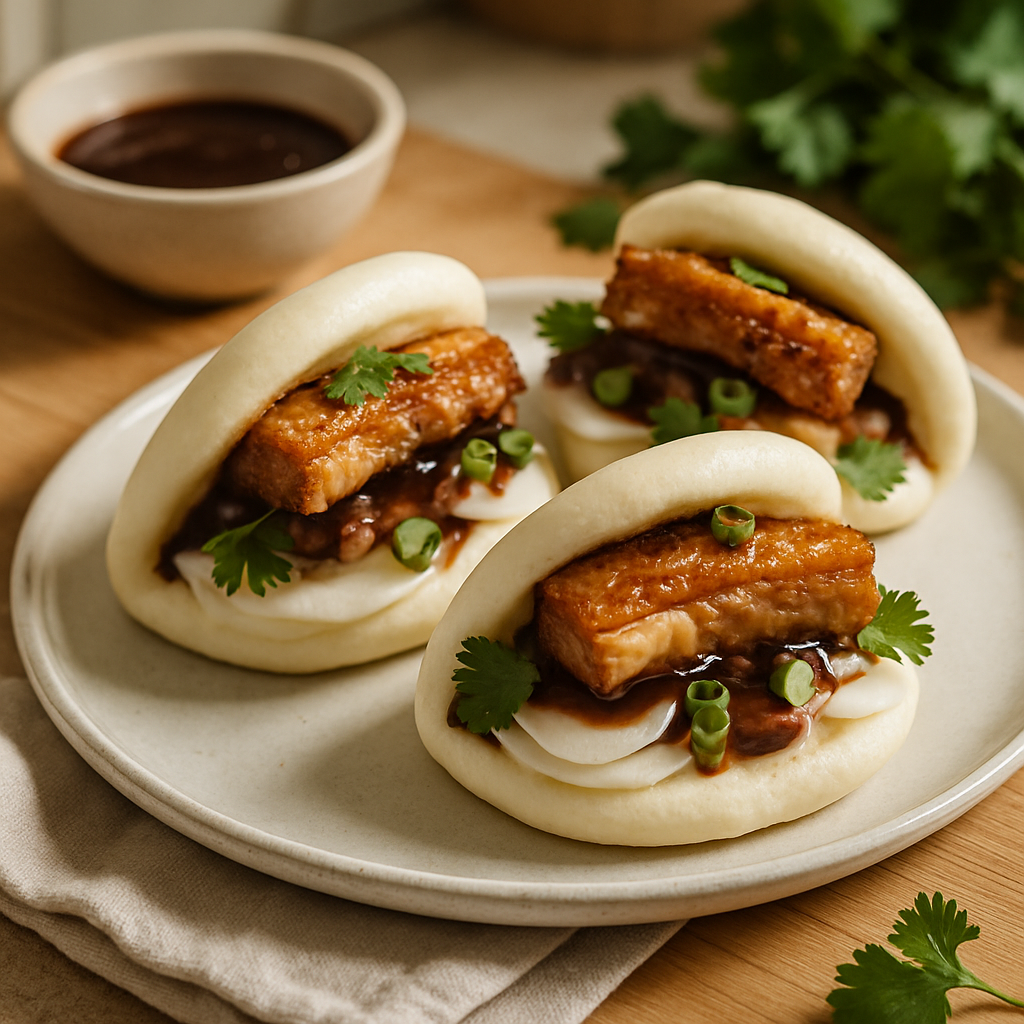
# Crispy Pork Belly Baos with Pickled Daikon and Hoisin
There's something almost theatrical about a bao bun. That pillow-soft exterior, the steam rising as you pull it open, and then — if you've done things right — a slab of gloriously crispy pork belly tucked inside with something sharp and something sweet. This recipe delivers exactly that, and it's far more achievable at a home level than most people assume.
Why Pork Belly Is Worth the Effort
Pork belly gets a reputation for being a "special occasion" cut, but it's actually one of the more forgiving pieces of meat to cook. It has a high fat-to-muscle ratio, which means it stays moist even if your timing is slightly off.
The goal here is contrast: crackling skin on top, tender braised meat underneath. Achieving that is mostly about patience and a couple of key techniques — nothing that requires professional equipment or years of kitchen experience.
It's also worth noting that pork belly is a genuinely nutritious cut. It's rich in B vitamins (particularly B1, B3, and B12), zinc, and selenium. The fat content is real, but it's a mix of saturated and unsaturated fats, and when eaten as part of a varied diet, it fits comfortably into most people's nutritional goals.
What the Evidence Shows
The nutritional profile of pork has been somewhat misrepresented over the years. Research published in Nutrients (2015) found that pork is one of the most micronutrient-dense animal proteins available, with particularly strong contributions to daily selenium and thiamine (B1) intake.
Fat content in context: A typical serving of pork belly (around 100g cooked) contains roughly 30–35g of fat. That sounds high in isolation, but in the context of a bao — where you're eating perhaps 80–100g of pork alongside vegetables, a steamed bun, and fermented condiments — the overall meal composition matters more than any single number.
Pickled vegetables like daikon also add a functional dimension. Fermented and pickled foods contribute to gut microbiome diversity, according to a 2021 Stanford study published in Cell, which found that diets higher in fermented foods increased microbiome diversity and reduced markers of inflammation. Even a quick-pickle (the method used here) adds beneficial organic acids and can help balance the richness of the pork.
The Ingredients You'll Need
For the pork belly: - 600g skin-on pork belly, scored on the skin side - 1 tsp Chinese five spice - 1 tsp garlic powder - ½ tsp white pepper - 1 tsp fine sea salt (for the meat) - 1 tbsp coarse sea salt (for the skin) - 1 tsp rice vinegar (to rub on the skin before roasting)
For the quick-pickled daikon: - 200g daikon radish, peeled and cut into thin matchsticks - 100ml rice vinegar - 1 tbsp caster sugar - 1 tsp fine salt - Optional: a pinch of dried chilli flakes
For assembling: - 8 steamed bao buns (store-bought frozen buns work well — David Chang famously used them) - 3–4 tbsp hoisin sauce - 2 spring onions, finely sliced - Fresh coriander leaves - Sliced fresh chilli (optional) - Cucumber ribbons or thin slices
How to Make It
Step 1 — Start the pickle first. Combine the rice vinegar, sugar, and salt in a small saucepan and heat gently until dissolved. Pour over the daikon in a bowl or jar, leave to cool, then refrigerate. Even 30 minutes of pickling makes a difference; a few hours is better.
Step 2 — Prep the pork. Pat the pork belly completely dry — this is non-negotiable for good crackling. Score the skin in a crosshatch pattern if your butcher hasn't already. Mix the five spice, garlic powder, and white pepper, and rub this all over the meat side (not the skin). Leave uncovered in the fridge for at least two hours, ideally overnight.
Step 3 — Season the skin. Before roasting, rub the skin with rice vinegar and then pack coarse salt on top. The vinegar helps draw out moisture; the salt accelerates the drying process.
Step 4 — Roast. Preheat your oven to 220°C (200°C fan). Place the pork belly skin-side up on a wire rack over a roasting tray. Roast at high heat for 25 minutes until the skin begins to bubble and blister. Reduce to 170°C (150°C fan) and cook for a further 45–50 minutes until the meat is completely tender. If the skin needs more work at the end, switch to the grill for 3–5 minutes — watch it carefully.
Step 5 — Rest and slice. Rest the pork belly for 10–15 minutes before cutting into slices roughly 1.5–2cm thick. This allows the juices to redistribute and makes slicing significantly easier.
Step 6 — Assemble. Steam the bao buns according to the packet instructions (typically 3–4 minutes from frozen). Spread hoisin inside each bun, add a slice of pork belly, top with pickled daikon, cucumber, spring onion, coriander, and chilli. Serve immediately.
What Makes This Work Nutritionally
The balance of this dish is one of the things that makes it satisfying without feeling heavy.
Protein comes primarily from the pork belly, with a 100g serving providing around 18–20g. The bao bun itself contributes a small additional amount from wheat flour.
Carbohydrates are moderate — a standard steamed bao bun contains roughly 25–30g of carbohydrate, making this a reasonable base for the meal. There's no dramatic insulin spike here because the fat and protein in the pork slow digestion.
The pickled daikon isn't just for crunch. Daikon is low in calories, contains vitamin C, and the pickling process adds acidity that not only cuts through the fat but genuinely aids digestion by stimulating gastric acid production.
Hoisin sauce is the wildcard — it adds flavour and a small amount of sugar, but in the quantities used per bao (roughly a teaspoon), it contributes meaningfully to the flavour profile without being a nutritional concern.
For a rough macro estimate per bao (based on one bun with approximately 80g pork belly): - Calories: ~420–460 kcal - Protein: ~18–20g - Carbohydrates: ~28–32g - Fat: ~24–28g
Common Mistakes and How to Avoid Them
The skin won't crackle. Nine times out of ten, this is a moisture problem. The skin must be completely dry before it goes into the oven. Leaving it uncovered in the fridge overnight makes a significant difference.
The meat is tough. This usually means the temperature was too high throughout, or it didn't cook long enough at the lower temperature. Pork belly needs time at a gentle heat for the collagen to break down into gelatine — that's what creates the tender, almost melting texture.
The bao buns are gummy. Overcrowding the steamer is the usual culprit. Give each bun space, and don't lift the lid during steaming — the sudden temperature change causes them to collapse and stick.
Practical Takeaways
- Make the pickle the day before — it genuinely improves in flavour overnight and saves you time on the day.
- Dry-brine the pork overnight — uncovered in the fridge with the salt and spices applied is far superior to a same-day prep.
- Buy frozen bao buns — they're consistent, convenient, and widely available in Asian supermarkets and most larger Tesco or Waitrose stores.
- Slice to order — keep the pork belly whole after resting and slice as you assemble. It stays juicier and the crackling holds better.
- Scale up easily — this recipe doubles without any adjustment to technique; just use a larger roasting tray and extend the low-temperature roasting time by 10–15 minutes.
---
> Macrology tip: If you want to hit specific macro targets while cooking meals like this, Macrology generates macro-perfect meal plans in seconds — [https://macrology.app/signin](https://macrology.app/signin)
Want meals like this planned to your exact macros?
Macrology generates a personalised meal plan in seconds — breakfast, lunch, dinner and snacks, all hitting your daily targets.
Start your free 14-day trial