Crispy Peanut Tofu Lettuce Cups with Pickled Carrot and Chilli Lime Dressing
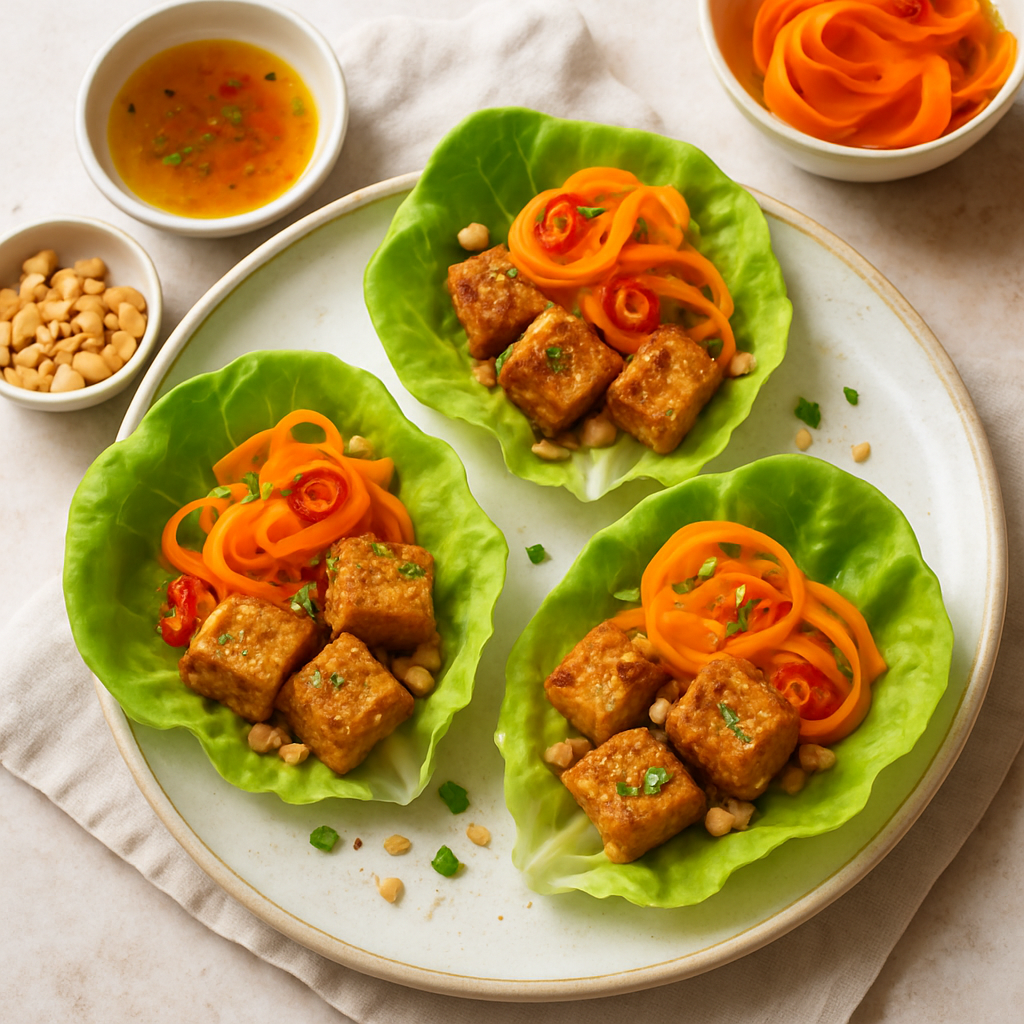
# Crispy Peanut Tofu Lettuce Cups with Pickled Carrot and Chilli Lime Dressing
There's something about a lettuce cup that makes eating feel effortless — no cutlery required, built-in freshness, and every bite a slightly different combination of textures. This recipe takes that simple idea and loads it with crispy tofu, a punchy peanut sauce, and a quick pickled carrot that cuts right through the richness.
What You'll Need
This recipe serves 2 as a main or 4 as a starter. The pickled carrot takes about 15 minutes to soften in the brine, so start there first.
For the pickled carrot:
- 2 medium carrots, julienned or coarsely grated
- 3 tbsp rice wine vinegar
- 1 tsp caster sugar
- ½ tsp fine salt
For the crispy tofu:
- 280g extra-firm tofu, pressed and cut into 1.5cm cubes
- 1 tbsp cornflour
- 1 tbsp light soy sauce
- 1 tbsp neutral oil (sunflower or rapeseed)
For the peanut sauce:
- 3 tbsp smooth peanut butter
- 1 tbsp soy sauce
- 1 tbsp lime juice
- 1 tsp sesame oil
- 1 tsp sriracha (or more, to taste)
- 1–2 tbsp warm water, to loosen
For the chilli lime dressing:
- Juice of 1 lime
- 1 tbsp fish sauce (or soy sauce to keep it vegan)
- 1 tsp honey or agave
- 1 small red chilli, finely sliced
To serve:
- 1 large head of butter lettuce or Little Gem, leaves separated
- Small handful of roasted peanuts, roughly crushed
- Fresh coriander or mint
- Sliced spring onions
---
How to Make It
Step 1 — Pickle the carrots
Combine the rice wine vinegar, sugar, and salt in a bowl and stir until dissolved. Add the julienned carrot, toss well, and set aside for at least 15 minutes. The carrot will soften slightly and turn a brighter orange — that's exactly what you want.
Step 2 — Press and coat the tofu
If you haven't pressed your tofu already, wrap it in a clean tea towel and press it under a heavy pan for 10–15 minutes. The drier the tofu, the crispier the result. Once pressed, cut into cubes, toss with soy sauce, and then coat evenly in cornflour. Don't skip the cornflour — it's the key to that golden, crispy exterior.
Step 3 — Fry the tofu
Heat the oil in a non-stick frying pan over medium-high heat. Add the tofu in a single layer, leaving space between pieces. Fry for 3–4 minutes without moving, then turn each piece and fry for another 2–3 minutes until golden and crisp on at least two sides. Set aside on a plate.
Step 4 — Make the peanut sauce
Whisk together the peanut butter, soy sauce, lime juice, sesame oil, and sriracha. Add warm water a tablespoon at a time until you reach a pourable, coating consistency. Taste and adjust — more lime for brightness, more sriracha for heat, more soy for depth.
Step 5 — Mix the dressing
Stir together the lime juice, fish sauce (or soy), honey, and sliced chilli. This dressing is sharp and punchy — it's meant to contrast the richness of the peanut sauce, so don't tone it down.
Step 6 — Assemble
Lay out your lettuce leaves on a board or large plate. Add a few pieces of crispy tofu to each cup, spoon over the peanut sauce, top with pickled carrot, and drizzle with the chilli lime dressing. Finish with crushed peanuts, fresh herbs, and spring onions.
Eat immediately — lettuce cups are at their best the moment they're assembled.
---
What Makes This Work Nutritionally
This recipe is a genuinely well-balanced plate, and the combination of ingredients isn't accidental.
Tofu is a complete protein, meaning it contains all nine essential amino acids. A 280g block of extra-firm tofu delivers roughly 28–32g of protein across two servings — solid for a plant-based main, especially when you factor in the additional protein from peanut butter.
Peanuts and peanut butter add not just flavour but a meaningful dose of healthy unsaturated fats, along with magnesium and niacin. The fat content here also helps your body absorb fat-soluble nutrients from the herbs and vegetables.
The pickled carrot isn't just a textural contrast — the acidity from the vinegar may help slow the absorption of carbohydrates in the meal, which can support more stable blood sugar levels over time. Carrots themselves are a good source of beta-carotene, which converts to vitamin A in the body.
Lettuce cups instead of a wrap or flatbread keeps the overall carbohydrate load lower, which might suit someone tracking macros or managing their intake — but they're not included for that reason alone. They genuinely taste better here. The cool, crisp leaf against the warm tofu is the whole point.
The chilli contains capsaicin, which has been studied for its potential effects on metabolism and appetite regulation — though the amounts in a home-cooked dish are modest. Consider it a bonus, not a health claim.
---
What the Evidence Shows
Plant-based protein sources like tofu are well-supported by the research. A 2019 review published in the European Journal of Nutrition found that soy protein is broadly comparable to animal protein in its effects on muscle protein synthesis when consumed in adequate amounts. For anyone reducing meat intake without wanting to sacrifice protein quality, tofu is one of the most reliable options available.
The wider dietary pattern here — lots of vegetables, plant protein, healthy fats, fresh herbs, and minimal ultra-processed ingredients — aligns closely with dietary patterns consistently associated with better long-term health outcomes in large population studies.
It's also worth noting that meals built around whole-food plant proteins tend to be higher in fibre and phytonutrients than their meat-based equivalents. That doesn't mean meat is bad — it just means this kind of meal brings its own nutritional advantages to the table.
---
Common Mistakes and How to Avoid Them
Not pressing the tofu. This is the most common reason tofu turns out soggy rather than crispy. Tofu holds a lot of water, and that water steams the cubes in the pan rather than letting them fry. Even 10 minutes of pressing makes a real difference.
Overcrowding the pan. If the tofu pieces are touching, they'll steam rather than crisp. Work in batches if your pan isn't large enough — it's worth the extra five minutes.
Making the peanut sauce too thick. It should coat a spoon but still drizzle easily. Too thick, and it clumps on the tofu rather than coating it evenly. Add warm water gradually and you'll hit the right consistency.
Assembling too far in advance. Lettuce cups wilt quickly once dressed. If you're making this for guests, keep all the components separate and let people build their own at the table — it also makes for a more interactive meal.
---
Swaps and Variations
The recipe is flexible in ways that don't compromise the overall balance.
Make it vegan by using soy sauce in place of fish sauce in the dressing and agave instead of honey. The depth of flavour barely changes.
Swap the tofu for tempeh if you want a nuttier, more textured protein. Tempeh is higher in fibre and has a firmer bite — slice it thinly and fry the same way.
No butter lettuce? Little Gem works just as well, and the smaller leaves make more naturally sized cups. Iceberg gives the most crunch but less flavour — still perfectly good.
Add rice or noodles if you want a more substantial meal. Cold vermicelli noodles tucked into the cup before the tofu work particularly well, and they soak up the dressing nicely.
---
Practical Takeaway
Here's what to take away if you want to make this recipe work reliably:
- Press your tofu for at least 10 minutes before cooking — don't skip it
- Make the pickled carrot first and let it sit while you prep everything else
- Taste and adjust both sauces before assembling — the peanut sauce should be rich and coating, the chilli lime dressing sharp and bright
- Keep everything separate until you're ready to eat, especially if making ahead
- The whole dish comes together in about 30 minutes once the tofu is pressed
If you want to dial in the macros for your specific goals, Macrology generates macro-perfect meal plans in seconds — https://macrology.app/signin
---
> Macrology tip: Building more plant-based meals into your week but not sure how they fit your protein targets? Macrology can build a full week of meals around your numbers — including recipes like this one — so you're never left guessing whether you're hitting what you need.
Want meals like this planned to your exact macros?
Macrology generates a personalised meal plan in seconds — breakfast, lunch, dinner and snacks, all hitting your daily targets.
Start your free 14-day trial