Crispy Hoisin Pork Lettuce Cups with Pickled Cucumber and Toasted Sesame
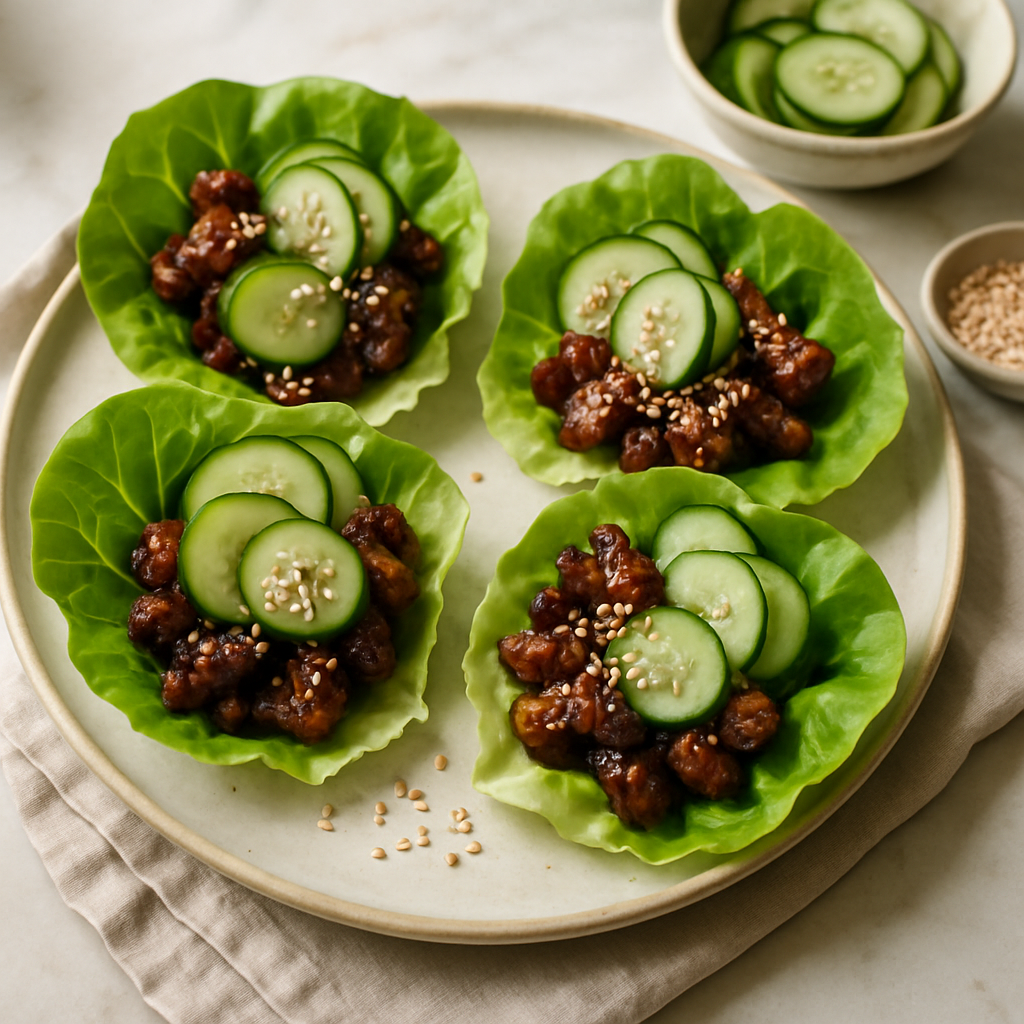
# Crispy Hoisin Pork Lettuce Cups with Pickled Cucumber and Toasted Sesame
There's something brilliant about a meal that looks like you've made an effort but comes together in under 30 minutes. These hoisin pork lettuce cups are exactly that — bold flavour, satisfying crunch, and a freshness that makes them feel light even when they're genuinely filling.
What Makes This Recipe Worth Making
Lettuce cups have a bit of a reputation as a "starter dish" or something you'd order at a restaurant and then forget to recreate at home. That's a missed opportunity.
When you build them properly — with crispy mince, a punchy sauce, and something sharp and cool to cut through the richness — they become a genuinely complete meal. This version uses hoisin-glazed pork mince, a quick-pickled cucumber, and toasted sesame seeds to get all the contrasting textures and flavours doing their job at once.
It works as a weeknight dinner, a shareable spread, or a meal prep option where the components stay separate until you're ready to eat.
The Ingredients
For the pork filling:
- 500g pork mince (10–15% fat works well)
- 2 tbsp hoisin sauce
- 1 tbsp soy sauce (light or reduced salt)
- 1 tsp sesame oil
- 2 garlic cloves, minced
- 1 thumb-sized piece of fresh ginger, grated
- 1 tbsp neutral oil (vegetable or groundnut)
- 4 spring onions, sliced (whites and greens separated)
- 1 tsp rice vinegar
- Optional: 1 tsp chilli flakes or a small fresh chilli, finely chopped
For the quick-pickled cucumber:
- ½ a cucumber, thinly sliced or cut into small half-moons
- 2 tbsp rice vinegar
- 1 tsp caster sugar
- Pinch of salt
To serve:
- 1 head of butter lettuce or little gem lettuce (leaves separated and kept whole)
- 2 tbsp sesame seeds, toasted in a dry pan
- Small handful of fresh coriander (optional but recommended)
- Sriracha or chilli sauce, to taste
How to Make It
Start with the pickle. Combine the rice vinegar, sugar, and salt in a small bowl, stir until the sugar dissolves, then add the cucumber. Leave it to sit while you cook everything else — even 15 minutes makes a real difference to the flavour.
Toast your sesame seeds in a dry frying pan over a medium heat, swirling regularly, until they turn golden and start to smell nutty. Takes about 2–3 minutes. Set aside.
Cook the pork. Heat the neutral oil in a large frying pan or wok over a high heat. Add the white parts of the spring onion, garlic, and ginger, and cook for about a minute until fragrant.
Add the pork mince and break it up as it cooks. You want it to brown properly here — resist the urge to stir constantly. Let it sit for a minute or two so it gets some colour and starts to crisp up at the edges. That texture is what makes the whole thing.
Once the pork is mostly cooked through and starting to crisp, add the hoisin sauce, soy sauce, sesame oil, and rice vinegar. Stir everything together and cook for another 2 minutes until the sauce is clinging to the meat and smells incredible. Taste and adjust — more hoisin for sweetness, a little extra soy for depth.
Assemble. Lay out the lettuce leaves like little bowls. Spoon in the pork filling, add a few slices of pickled cucumber on top, scatter over the sesame seeds and green parts of the spring onion, and add coriander if you're using it.
Serve immediately so the lettuce stays crisp.
What Makes This Work Nutritionally
This isn't a recipe designed around restriction — it's built around balance, and that happens to make it a solid nutritional choice as well.
Protein is the headline here. Pork mince is a high-quality protein source with a strong amino acid profile, meaning it supports muscle repair and keeps you feeling full for longer. A 500g batch across four servings delivers roughly 25–30g of protein per portion depending on the fat content of your mince.
Fat comes mostly from the pork itself and the small amount of sesame oil — which adds flavour as much as fat. Sesame oil contains a mix of oleic and linoleic acids, both of which are associated with normal cardiovascular function as part of a balanced diet.
The quick-pickled cucumber does more than add freshness. Cucumbers are mostly water, which makes them genuinely hydrating, and the vinegar used in the pickle may support digestive comfort, though the evidence for this is still emerging.
Butter or little gem lettuce adds almost nothing in calorie terms but contributes a small amount of folate and vitamin K, plus that essential crunch.
The sesame seeds are a sleeper ingredient nutritionally. They're a reasonable source of calcium, iron, and magnesium for their size — a tablespoon contains around 88mg of calcium — and the toasting process enhances their nutty flavour without significantly altering their nutritional profile.
Overall, a serving comes in at roughly 350–400 kcal, with a macro split that skews towards protein and moderate fat, with relatively low carbohydrate from the sauce alone.
Tips for Getting the Texture Right
The crispy pork is the heart of this dish, and there's one thing that ruins it most often: crowding the pan.
If you add all 500g of mince to a small pan at once, the temperature drops and the meat steams rather than fries. Use a large frying pan or wok, cook on a high heat, and give the pork room. If your pan isn't big enough, cook it in two batches.
The other thing worth mentioning is moisture in the mince. If there's any excess liquid after the pork has cooked through, let it cook off before adding the sauce. You want the sauce to caramelise onto the meat, not sit in a pool.
If you're using iceberg lettuce instead of butter lettuce or little gem, it works — it's just a bit more unwieldy. Little gem tends to hold its cup shape better and has a slightly sweeter flavour that pairs well with the hoisin.
How to Adapt This for Different Goals
The base recipe is already reasonably balanced, but small swaps change the nutritional profile meaningfully.
Higher protein, lower fat: Use lean pork mince (5% fat) or swap in turkey mince. The flavour is slightly less rich but still works well with the hoisin.
More carbohydrate: Serve alongside a small bowl of steamed rice or vermicelli noodles. This makes it a heartier meal and increases the overall calorie content — useful if you're eating in a surplus or just particularly hungry.
Lower sodium: Hoisin and soy sauce both carry a decent amount of salt. Using a reduced-salt soy sauce and making sure your hoisin brand isn't loaded with added sodium keeps the overall sodium content more reasonable.
Vegetarian version: Firm tofu or a mix of mushrooms and water chestnuts as a base, with the same sauce, works surprisingly well. The texture won't be crispy in the same way, but the flavour profile holds up.
Practical Takeaways
- Start the pickle first — it needs at least 15 minutes to do its job
- High heat and a big pan are non-negotiable for crispy pork; don't rush it
- Toast the sesame seeds in a dry pan — it takes 3 minutes and makes a noticeable difference
- Keep the lettuce leaves dry and cold until you're ready to assemble; they stay crisper longer
- The pork filling reheats well — store it separately from the lettuce and cucumber and assemble fresh each time
- Scale this up easily: double the mince and sauce, use two pans, and you've got a shareable table spread
---
If you want to hit your protein targets without spending an hour planning meals, Macrology generates macro-perfect meal plans in seconds — https://macrology.app/signin
> Macrology tip: Add this recipe to your weekly rotation in Macrology and it'll automatically balance the rest of your day's meals around it — adjusting your other meals to hit your fat, carb, and protein targets without you doing any maths.
Want meals like this planned to your exact macros?
Macrology generates a personalised meal plan in seconds — breakfast, lunch, dinner and snacks, all hitting your daily targets.
Start your free 14-day trial