Crispy Halloumi Wraps with Roasted Red Onion, Rocket and Harissa Yoghurt
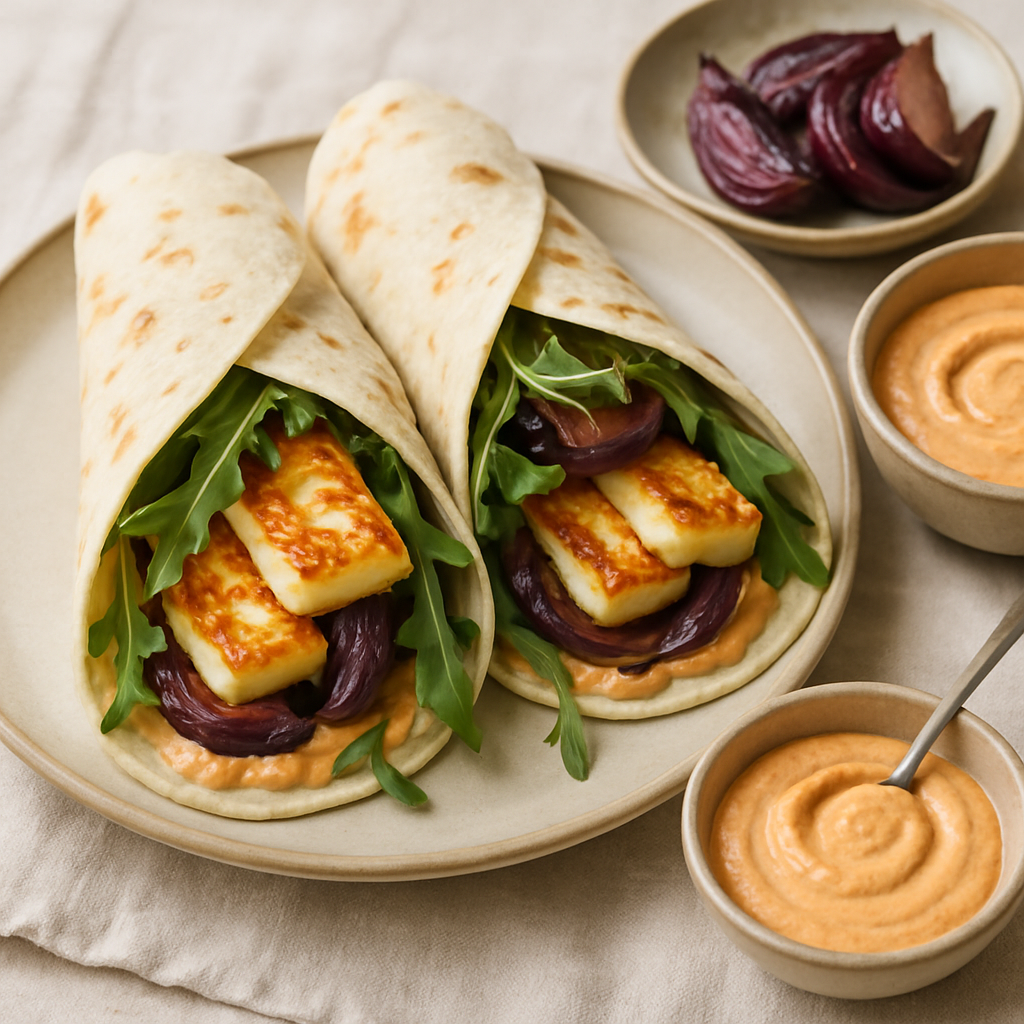
# Crispy Halloumi Wraps with Roasted Red Onion, Rocket and Harissa Yoghurt
There's something deeply satisfying about a wrap that manages to be both genuinely filling and genuinely interesting — not just a sad desk lunch, but something you'd actually look forward to making. This one delivers on both fronts, with golden, crispy halloumi, sweet roasted red onion, peppery rocket, and a harissa yoghurt that ties everything together with a gentle kick.
Why This Wrap Actually Works
Most halloumi wraps fall flat because the cheese is rubbery, the filling is underwhelming, or the whole thing collapses before you get to the second bite. This version fixes all of that.
The trick is treating each component with a bit of intention. The red onion gets time in the oven, which transforms it from sharp and pungent to soft, caramelised, and almost jammy. The halloumi is patted dry and cooked in a hot, dry pan so it gets genuinely crispy on the outside rather than steaming in its own moisture. And the harissa yoghurt isn't just a sauce — it's doing real flavour work, adding creaminess, heat, and acidity in one go.
Put it all together in a warm flatbread and you've got something far more than the sum of its parts.
Ingredients (Serves 2)
For the roasted red onion: - 2 medium red onions, cut into thin wedges - 1 tbsp olive oil - 1 tsp balsamic vinegar - Pinch of salt
For the halloumi: - 250g halloumi, sliced into 1cm pieces - ½ tsp smoked paprika - 1 tsp olive oil
For the harissa yoghurt: - 4 tbsp Greek yoghurt (full fat or low fat, your call) - 1–2 tsp rose harissa (adjust to your heat preference) - 1 tsp lemon juice - Small pinch of salt
To assemble: - 2 large flatbreads or wraps - A generous handful of rocket - Fresh mint leaves (optional, but worth it) - Lemon wedges to serve
Method
Step 1 — Roast the onions
Preheat your oven to 200°C (180°C fan). Toss the red onion wedges with olive oil, balsamic vinegar, and a pinch of salt on a baking tray. Spread them out so they're not crowded — this is important, as crowded onions steam rather than caramelise. Roast for 25–30 minutes, turning once halfway through, until soft and beginning to catch at the edges.
Step 2 — Make the harissa yoghurt
While the onions roast, mix the Greek yoghurt, harissa, lemon juice, and salt together in a small bowl. Taste and adjust — more harissa if you want more heat, more lemon if you want a sharper edge. Set aside.
Step 3 — Cook the halloumi
Pat the halloumi slices thoroughly dry with kitchen paper. This step makes a real difference to how crispy the final result is. Toss the slices lightly with smoked paprika and a small drizzle of olive oil. Heat a non-stick or cast iron pan over a high heat until it's properly hot, then add the halloumi in a single layer. Cook for 2–3 minutes per side without moving them — you're looking for a deep golden crust.
Step 4 — Warm the wraps
Either warm your flatbreads directly over a gas flame for 30 seconds each side, or wrap them in foil and place in the oven for the last 5 minutes of the onion cooking time. A warm flatbread makes the whole wrap feel considerably more luxurious.
Step 5 — Assemble
Spread a generous layer of harissa yoghurt across each flatbread. Add the roasted onions, then the halloumi slices. Top with rocket, a few mint leaves if using, and a squeeze of lemon. Fold or roll, and eat immediately while the halloumi is still hot and the rocket still has bite.
What Makes This Work Nutritionally
Halloumi often gets written off as "too salty" or "too fatty" to eat regularly, but the nutritional picture is more interesting than that.
Halloumi is a solid source of protein and calcium. A 250g pack split between two people gives roughly 18–20g of protein per serving, alongside meaningful amounts of calcium — important for bone health at every life stage, not just childhood. Yes, it's higher in saturated fat than, say, chicken breast, but used as part of a varied diet, it's a perfectly reasonable choice.
Greek yoghurt adds another protein hit. Full-fat Greek yoghurt contributes additional protein and a dose of gut-friendly bacteria, while the fat content helps the harissa flavours carry and makes the sauce feel rich without needing anything else added.
Rocket is doing quiet nutritional work. It's easy to dismiss salad leaves as filler, but rocket contains glucosinolates — compounds studied for their potential role in reducing inflammation — as well as vitamin K, folate, and nitrates that support cardiovascular health. The peppery flavour also means you don't need much else to make the wrap feel complete.
Red onion brings more than sweetness. Onions are a source of quercetin, a plant compound with antioxidant properties, as well as prebiotic fibres that feed beneficial gut bacteria. Roasting concentrates their natural sugars without destroying these benefits.
The wrap itself is carbohydrate-rich, which is exactly what you want if this is a proper meal — it provides energy, and combined with the protein and fat from halloumi and yoghurt, it digests at a steady pace rather than spiking and crashing.
What the Evidence Shows
There's a tendency in popular nutrition conversation to pit protein sources against each other — meat versus plant-based, dairy versus non-dairy — as though the goal is to find a single winner. The reality, as most nutrition researchers would agree, is that dietary patterns matter far more than individual foods.
A 2019 review published in The Lancet on sustainable healthy diets (the EAT-Lancet Commission report) highlighted that a diet rich in diverse plant foods, with moderate amounts of dairy, eggs, and fish, and smaller amounts of red and processed meat, is both nutritionally adequate and environmentally more sustainable than a typical Western diet. This wrap aligns well with that pattern — it's plant-forward, uses dairy in a supporting rather than dominant role, and gets meaningful nutrition from vegetables and legume-based wraps if you choose them.
On the topic of harissa specifically: chilli-based condiments contain capsaicin, which has been studied for its potential effects on metabolism and satiety. The evidence is modest but consistent — adding chilli to food may slightly increase feelings of fullness and thermogenesis. More practically, harissa makes food more enjoyable, and eating food you actually like is one of the most underrated factors in sustainable, balanced eating.
Swaps and Variations
This recipe is quite flexible if you want to adapt it.
Make it higher protein: Add a handful of cooked chickpeas or butter beans to the wrap alongside the halloumi. They bulk it out and add plant-based protein and fibre without changing the flavour profile.
Lower calorie version: Use a smaller amount of halloumi (150g between two) and load up on extra rocket and roasted vegetables. The harissa yoghurt made with lower-fat Greek yoghurt still delivers plenty of flavour.
Vegan version: Swap halloumi for firm tofu, pressed and marinated in smoked paprika, lemon juice, and a little soy sauce before pan-frying. Replace Greek yoghurt with a thick coconut or oat-based yoghurt and add harissa as usual.
Add grains: Serve on top of a small bed of bulgur wheat or couscous instead of a wrap for a more substantial plate-based meal.
Practical Takeaway
A few things that genuinely improve this recipe:
- Dry your halloumi properly. Moisture is the enemy of crispiness. Thirty seconds with kitchen paper makes a noticeable difference.
- Don't rush the onions. Twenty-five minutes feels like a long time but the caramelisation is what makes them worth eating. Underdone red onion in a wrap is harsh and one-note.
- Season your harissa yoghurt properly. Taste it before it goes on the wrap. Greek yoghurt can be quite bland on its own, so it needs enough harissa and lemon to have presence.
- Eat it immediately. Halloumi goes from crispy to rubbery surprisingly quickly once it cools. This is a make-it-and-eat-it dish rather than a meal prep option.
This is the kind of recipe that takes about 35 minutes start to finish and feels like you've made considerably more effort than you actually have — which is exactly the kind of cooking most of us want more of.
---
> Macrology tip: If you want your meals to hit specific macro targets without the mental load of calculating everything yourself, Macrology generates macro-perfect meal plans in seconds — [https://macrology.app/signin](https://macrology.app/signin)
Want meals like this planned to your exact macros?
Macrology generates a personalised meal plan in seconds — breakfast, lunch, dinner and snacks, all hitting your daily targets.
Start your free 14-day trial