Crispy Five-Spice Pork Belly Salad with Pickled Mooli and Chilli Lime Dressing
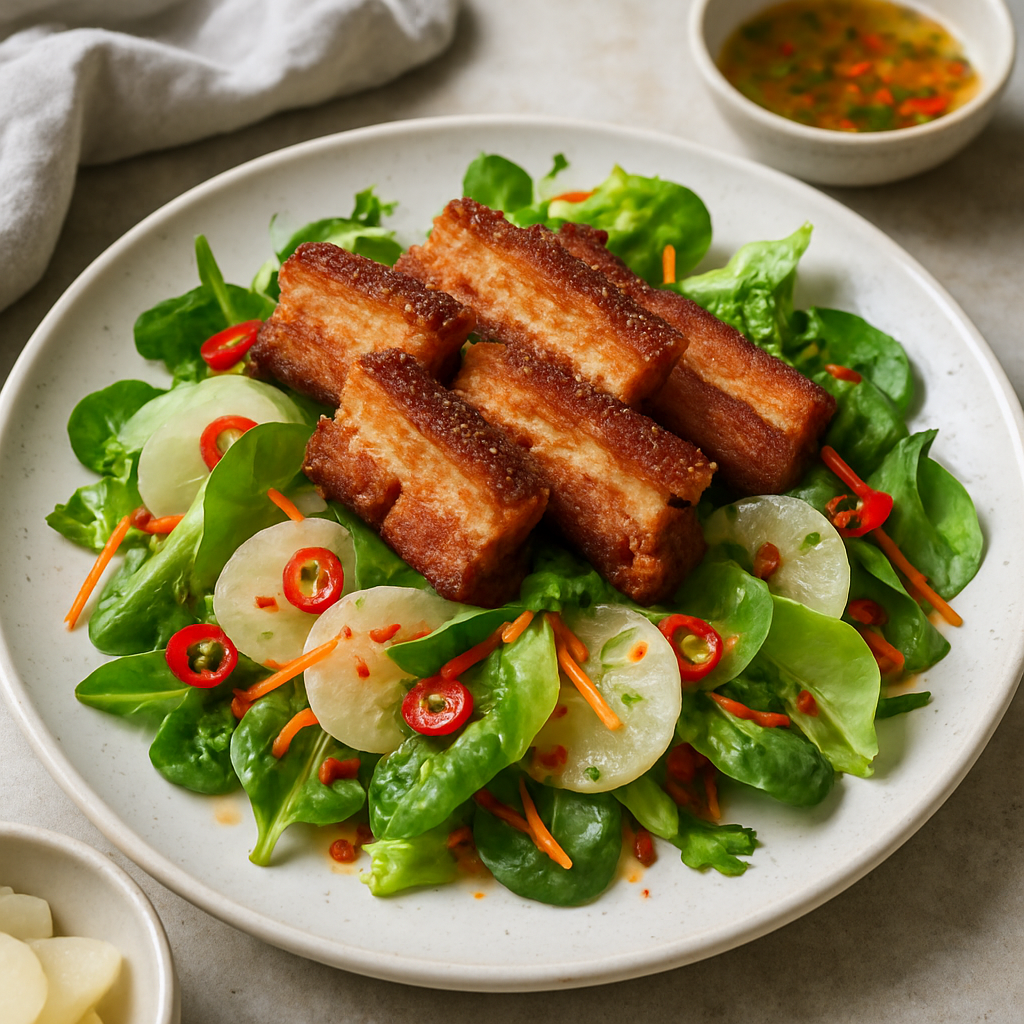
# Crispy Five-Spice Pork Belly Salad with Pickled Mooli and Chilli Lime Dressing
Pork belly and salad might sound like an unlikely pairing, but this combination is one of those dishes that genuinely stops people mid-bite. The contrast between shatteringly crispy pork, cool pickled mooli, and a sharp, punchy dressing is the kind of thing that makes you want to cook it again the following weekend.
What Makes This Salad Worth Your Time
This isn't a salad in the sad, side-dish sense. It's a proper meal — substantial, bold, and full of textures that keep every forkful interesting.
The five-spice does a lot of the heavy lifting here. That blend of star anise, cloves, cinnamon, Sichuan pepper, and fennel seeds creates a warm, aromatic crust on the pork that plays brilliantly against the acidic brightness of the dressing. The pickled mooli (also known as daikon) cuts through the richness of the fat in a way that feels almost cleansing without being fussy.
It's also a genuinely flexible recipe. You can prep the pork and the pickle the day before, meaning the actual assembly on the night takes less than ten minutes.
The Ingredients
For the pork belly: - 600g pork belly, skin scored with a sharp knife - 1½ tsp Chinese five-spice powder - 1 tsp fine sea salt - ½ tsp white pepper - 1 tbsp neutral oil (vegetable or sunflower)
For the pickled mooli: - 200g mooli (daikon), peeled and cut into thin matchsticks - 100ml rice wine vinegar - 1 tsp caster sugar - ½ tsp fine salt
For the chilli lime dressing: - Juice of 2 limes - 1 tbsp fish sauce - 1 tsp sesame oil - 1 tsp honey - 1 red chilli, finely sliced (deseeded if you prefer less heat) - 1 small garlic clove, finely grated
For the salad base: - 2 large handfuls of mixed leaves (little gem, watercress, or Asian-style greens work well) - 1 large carrot, julienned or coarsely grated - 4 spring onions, finely sliced on the diagonal - A small bunch of fresh coriander, leaves picked - A small handful of mint leaves - 2 tbsp toasted sesame seeds or crushed roasted peanuts
How to Make It
Step 1 — Pickle the mooli first. Combine the rice wine vinegar, sugar, and salt in a bowl and stir until dissolved. Add the mooli matchsticks, toss to coat, and leave for at least 30 minutes. An hour is better. Overnight in the fridge is better still. The mooli will soften slightly and turn a pale, translucent colour — that's exactly what you want.
Step 2 — Prepare and cook the pork belly. Pat the pork belly completely dry with kitchen paper — this is non-negotiable for getting a crispy skin. Mix the five-spice, salt, and white pepper together and rub the mixture all over the flesh side of the pork. Leave the skin as clean as possible, then rub the skin with a little oil and an extra pinch of salt.
Step 3 — Roast the pork. Preheat your oven to 220°C fan. Place the pork belly skin-side up on a wire rack over a roasting tin. Roast at high heat for 25 minutes until the skin starts to bubble and blister. Turn the oven down to 170°C fan and continue roasting for a further 45 minutes. Rest for 10 minutes before slicing into thick pieces or smaller cubes — your choice.
Step 4 — Make the dressing. Whisk all the dressing ingredients together in a small bowl or jar. Taste it — it should be sharp, slightly sweet, salty, and have a gentle heat. Adjust the lime or fish sauce to your preference.
Step 5 — Assemble. Layer your salad greens, carrot, and spring onions on a large plate or platter. Drain the pickled mooli and scatter it over the top. Add the warm pork belly pieces. Spoon the dressing generously over everything. Finish with coriander, mint, and your sesame seeds or peanuts.
Serve immediately — this is a dish that wants to be eaten while the pork is still warm and the leaves are still crisp.
What Makes This Work Nutritionally
Pork belly has a reputation for being indulgent, and it does contain a reasonable amount of fat — but that fat is doing something useful here. It keeps the protein moist and flavourful, and when paired with the fibre and water content of the vegetables, the dish becomes far more balanced than it might look on paper.
Protein is the real standout. A 150g portion of pork belly provides around 25–30g of protein, which supports satiety and muscle maintenance. Pair that with the carrot, mooli, and leaves and you're also pulling in a useful range of vitamins, including vitamin C from the lime, and folate from the greens.
The mooli itself is a low-calorie, high-water vegetable with a decent hit of vitamin C and some digestive enzymes traditionally used in East Asian cooking. Pickling it doesn't diminish its nutritional value in any meaningful way — if anything, the fermentation process in longer-pickled preparations can support gut health.
The dressing contributes almost no calories but adds significant flavour through fish sauce, which is rich in glutamates (the naturally occurring compound responsible for umami), and sesame oil, which provides small amounts of healthy unsaturated fats and a distinctive toasty flavour.
What the Evidence Shows
There's a persistent idea that high-fat cuts of meat are categorically something to avoid. The picture is more nuanced than that. Research published in journals including the American Journal of Clinical Nutrition has found that when saturated fat is consumed as part of a diet that is also high in vegetables, fibre, and whole foods, its impact on cardiovascular markers is far less dramatic than previously assumed.
The key variable tends to be overall dietary pattern rather than any single ingredient. A pork belly salad loaded with fresh herbs, pickled vegetables, and a vinegar-based dressing sits in a very different nutritional context from the same pork served with chips and a white bread roll.
The lime and chilli dressing is also worth noting. Capsaicin — the compound that gives chilli its heat — has been studied for its potential role in appetite regulation and metabolism, though effects are modest. More straightforwardly, using a citrus-and-vinegar base for a dressing rather than a cream or oil-heavy one means you get maximum flavour with minimal additional calories.
A Few Tips to Get It Right
Score the skin deeply. If your knife isn't getting through the fat layer, the skin won't crackle properly. A sharp craft knife or a clean Stanley knife works better than most kitchen knives for this job.
Don't skip the resting time. Resting the pork allows the juices to redistribute. Cut it too soon and the slices will lose moisture quickly.
Make the pickle the night before if you can. The mooli becomes more flavoursome and the texture improves significantly after several hours in the pickling liquid.
Balance the dressing to your taste. Fish sauce varies in saltiness between brands. Start with less and build up — you can always add more, but you can't take it away.
Practical Takeaways
- Pork belly is easiest to slice when slightly cooled — if it's straight from the oven, give it a full 10 minutes of rest
- Batch the pickle — a big jar keeps in the fridge for up to a week and works brilliantly on other salads, grain bowls, or alongside noodles
- Swap the protein if needed — the five-spice rub and chilli lime dressing work just as well with duck breast or firm tofu
- Track the macros before you cook — knowing the protein, fat, and carbohydrate split of a recipe in advance makes it easier to fit into your day without guesswork
If you want to hit your protein targets without spending an hour every evening calculating macros, Macrology generates macro-perfect meal plans in seconds — https://macrology.app/signin
---
> Macrology tip: Add this recipe to your Macrology meal plan and the app will automatically calculate the full macronutrient breakdown per serving — adjusting portion sizes to match your individual targets. No spreadsheet required.
Want meals like this planned to your exact macros?
Macrology generates a personalised meal plan in seconds — breakfast, lunch, dinner and snacks, all hitting your daily targets.
Start your free 14-day trial