Crispy Baked Falafel Bowls with Tabbouleh and Tahini Dressing
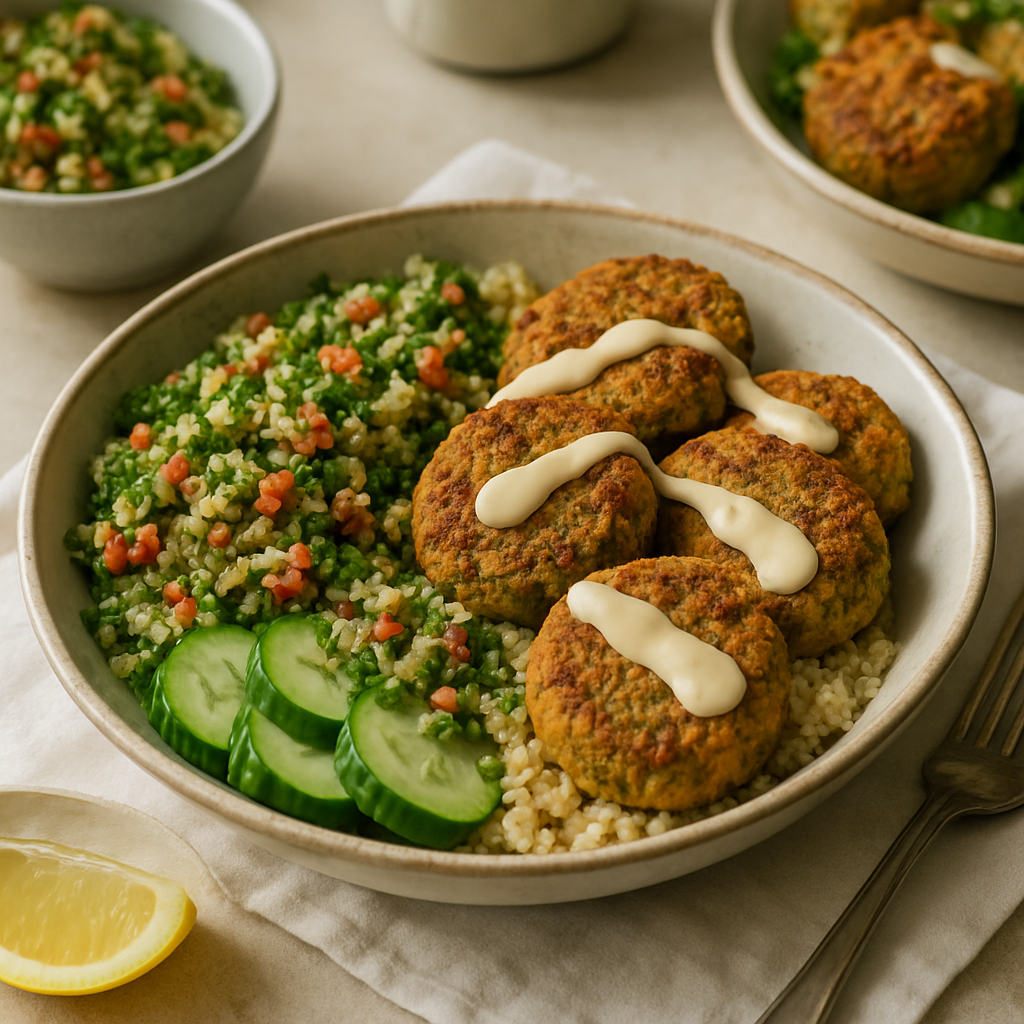
# Crispy Baked Falafel Bowls with Tabbouleh and Tahini Dressing
There's a reason falafel has been a staple across the Middle East for thousands of years — it's genuinely satisfying, packed with flavour, and built from ingredients that do a lot of nutritional heavy lifting. This baked version gives you that golden, crispy exterior without the mess of deep frying, and the full bowl brings together tabbouleh, tahini dressing, and fresh vegetables into something that feels like a proper meal rather than an afterthought.
Why This Bowl Works
Falafel bowls are one of those meals that look impressive but come together in a surprisingly logical way. Every component has a job to do — the falafel brings protein and texture, the tabbouleh adds freshness and fibre, and the tahini dressing ties everything together with richness and depth.
What makes this recipe particularly useful is that it scales well. Make a batch of falafel on a Sunday and you've got the base of several lunches or dinners sorted. The components also travel well separately, making this a genuinely practical option for packed lunches.
Ingredients (Serves 4)
For the falafel: - 2 x 400g tins of chickpeas, drained and thoroughly dried - 1 small white onion, roughly chopped - 3 cloves of garlic - Large handful of fresh flat-leaf parsley - Large handful of fresh coriander - 1½ tsp ground cumin - 1 tsp ground coriander - ½ tsp smoked paprika - ½ tsp salt - 2 tbsp plain flour (or chickpea flour to keep it gluten-free) - 1 tbsp olive oil (for brushing)
For the tabbouleh: - 150g bulgur wheat - Large bunch of flat-leaf parsley, finely chopped - Small bunch of fresh mint, finely chopped - 3 medium tomatoes, finely diced - ½ cucumber, finely diced - 3 spring onions, finely sliced - Juice of 1½ lemons - 2 tbsp extra virgin olive oil - Salt and pepper to taste
For the tahini dressing: - 4 tbsp tahini - Juice of 1 lemon - 1 small clove of garlic, minced - 3–5 tbsp cold water (to loosen) - Salt to taste
To serve: - 4 large handfuls of mixed salad leaves or shredded iceberg - ½ cucumber, sliced - A few radishes, thinly sliced - Optional: pickled red onions, chilli flakes, flatbread
How to Make It
Step 1 — Make the falafel mixture. The most important step here is getting the chickpeas as dry as possible. After draining, spread them on a clean tea towel and pat firmly. Any excess moisture is the enemy of crispy falafel. Add the chickpeas, onion, garlic, herbs, and spices to a food processor and pulse — you want a rough, slightly crumbly mixture, not a smooth paste. Stir in the flour, then refrigerate the mixture for at least 30 minutes. This helps it firm up and hold its shape.
Step 2 — Shape and bake. Preheat your oven to 200°C (fan 180°C). Line a baking tray with parchment. Scoop roughly 1½ tablespoons of mixture per falafel and shape into slightly flattened patties — flatter than a ball gives more surface area for crispiness. Brush lightly with olive oil on both sides. Bake for 25–30 minutes, flipping halfway through, until deep golden and firm to the touch.
Step 3 — Make the tabbouleh. Cook the bulgur wheat according to the packet (usually just covered with boiling water and left to absorb for 15 minutes). Fluff with a fork and leave to cool. Traditional tabbouleh is heavily herb-forward — the grain is really a backdrop. Once the bulgur is cool, combine everything and dress with lemon juice and olive oil. Season generously and taste as you go. It should be bright and punchy.
Step 4 — Make the tahini dressing. Whisk the tahini with the lemon juice and garlic. It will seize up at first — that's normal. Add cold water a tablespoon at a time, whisking until you reach a smooth, pourable consistency. It should coat a spoon lightly but drizzle easily.
Step 5 — Assemble. Lay down a base of salad leaves, spoon on the tabbouleh, add 4–5 falafel per bowl, and finish with cucumber, radishes, and a generous drizzle of tahini dressing.
What Makes This Work Nutritionally
This bowl earns its place in a balanced diet through the quality and variety of what's going on, not just the calorie count.
Chickpeas are one of the better plant-based protein sources — a 400g tin provides roughly 19g of protein alongside significant amounts of iron, folate, and manganese. Crucially, they're also high in both soluble and insoluble fibre, which supports gut health and helps with satiety.
Bulgur wheat is an underrated grain. It has a lower glycaemic index than white rice or couscous and retains more of the wheat's natural fibre. It's also a decent source of magnesium and B vitamins.
Tahini deserves more credit than it often gets. Made from ground sesame seeds, it provides calcium, healthy unsaturated fats, and a range of antioxidants including sesamol and sesamin, which have been studied for their anti-inflammatory properties.
Fresh herbs in the tabbouleh aren't just garnish — parsley in particular is surprisingly high in vitamin K and vitamin C. Using them in large quantities, as tabbouleh traditionally does, means you're actually getting a meaningful nutritional contribution.
Per serving, this bowl comes in at approximately 480–520 calories, with around 22g protein, 55g carbohydrates, and 18g fat — though exact figures will vary depending on portion sizes and additions.
What the Evidence Shows
Plant-based meals built around legumes like chickpeas are consistently associated with positive health outcomes in the research. A 2021 review published in Advances in Nutrition found that regular legume consumption was linked to reduced risk of cardiovascular disease, improved glycaemic control, and better weight management over time — largely attributed to their fibre content and low glycaemic load.
The Mediterranean dietary pattern — which this bowl broadly fits into — is one of the most studied eating patterns in nutritional science, with strong evidence linking it to reduced inflammation, better cognitive outcomes in ageing, and lower all-cause mortality. This isn't about labelling the bowl as a "superfood" meal, but the evidence for eating more legumes, whole grains, olive oil, and fresh vegetables is genuinely robust.
It's also worth noting that baking rather than frying doesn't dramatically change the protein or fibre content of the falafel — the main difference is fat content and overall calorie density. Whether you bake or fry is largely a practical and textural choice rather than a moral one.
Practical Takeaways
- Dry your chickpeas thoroughly — this is the single biggest factor in getting crispy baked falafel. Don't rush it.
- Chill the mixture before shaping. Thirty minutes in the fridge makes the falafel much easier to handle and reduces crumbling.
- Make tabbouleh ahead — it improves after an hour or two as the bulgur absorbs the lemon dressing. It keeps well in the fridge for up to two days.
- Batch cook the falafel — they reheat well in the oven (10 minutes at 180°C) or in a dry frying pan, and keep refrigerated for up to four days.
- Adjust the tahini dressing to your preference — more lemon for brightness, more water for a lighter drizzle, a pinch of cumin if you want it earthier.
- If you're tracking macros, weigh your tahini — it's calorie-dense and easy to over-pour, which can shift the nutritional balance of the bowl significantly.
---
If you want to hit your protein and fibre targets while actually enjoying what you eat, Macrology generates macro-perfect meal plans in seconds — https://macrology.app/signin
> Macrology tip: Building meals like this falafel bowl — high-fibre, high-protein, built from whole ingredients — is exactly the kind of eating Macrology is designed to support. Add this bowl to your plan and let the app calculate your exact macros based on your portion sizes and goals.
Want meals like this planned to your exact macros?
Macrology generates a personalised meal plan in seconds — breakfast, lunch, dinner and snacks, all hitting your daily targets.
Start your free 14-day trial