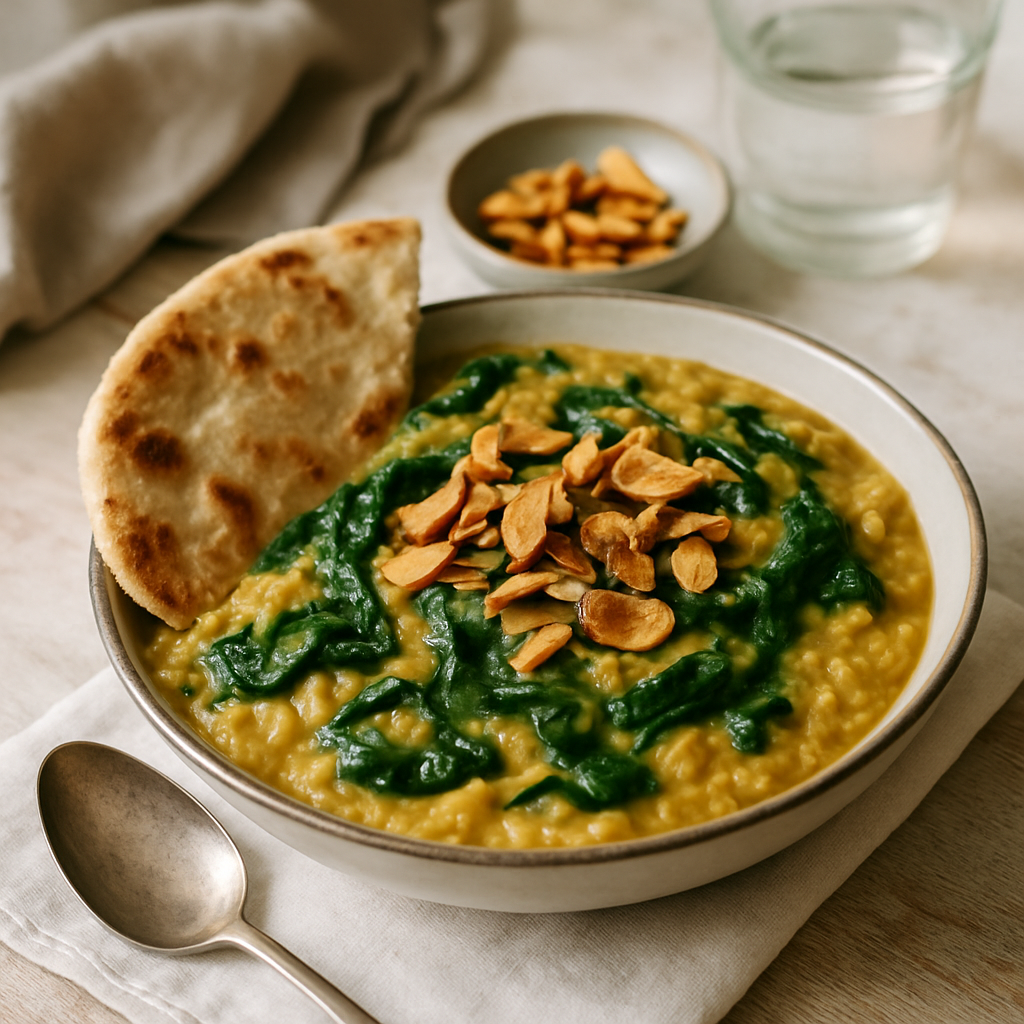
Coconut and Spinach Dahl with Crispy Garlic and Flatbread
# Coconut and Spinach Dahl with Crispy Garlic and Flatbread
There's something quietly brilliant about a bowl of dahl. It costs next to nothing, takes about 30 minutes, and somehow manages to taste like it's been simmering all day.
This coconut and spinach version is warming, deeply savoury, and genuinely filling — the kind of meal that earns a permanent spot in your weekly rotation.
What makes this work nutritionally
Red lentils are one of the most nutrient-dense ingredients you can build a meal around. A standard 100g dry portion delivers roughly 26g of protein and 52g of carbohydrates, alongside a solid hit of iron, folate, and dietary fibre.
The fibre here is worth highlighting — lentils contain both soluble and insoluble fibre, which supports digestive health and helps keep blood sugar levels more stable after eating. That's part of why a lentil-based meal tends to keep you full for longer than a similar-calorie meal built around refined carbohydrates.
Spinach brings iron, magnesium, and vitamin K to the bowl. Adding it towards the end of cooking (rather than at the start) helps preserve more of its water-soluble nutrients, which can degrade with prolonged heat.
Coconut milk contributes saturated fat, which some people are cautious about. The evidence here is nuanced — current research suggests the saturated fats in coconut milk behave somewhat differently to those from animal sources, and in the context of an otherwise balanced diet, a portion of light coconut milk is unlikely to be a concern for most people.
The ingredients
For the dahl:
- 250g red split lentils, rinsed
- 1 x 400ml tin of light coconut milk
- 400ml vegetable stock
- 1 x 400g tin of chopped tomatoes
- 200g fresh spinach
- 1 large onion, finely diced
- 4 cloves of garlic, minced (plus 2 extra for the crispy topping)
- 1 thumb-sized piece of fresh ginger, grated
- 1 tsp ground cumin
- 1 tsp ground coriander
- 1 tsp turmeric
- ½ tsp chilli flakes (adjust to taste)
- 1 tbsp coconut oil or neutral cooking oil
- Salt to taste
- Juice of half a lemon
For the crispy garlic:
- 2 cloves of garlic, thinly sliced
- 2 tbsp neutral oil (such as sunflower or rapeseed)
To serve:
- 4 flatbreads (shop-bought or homemade)
- Optional: plain yoghurt, fresh coriander, sliced chilli
How to make it
Step 1 — Build your base
Heat your oil in a large, heavy-bottomed pan over a medium heat. Add the diced onion and cook for 8–10 minutes, stirring occasionally, until soft and starting to turn golden. Don't rush this step — the sweetness you develop here is the foundation of the whole dish.
Add the minced garlic and grated ginger, stir through, and cook for another 2 minutes until fragrant.
Step 2 — Toast the spices
Add the cumin, coriander, turmeric, and chilli flakes directly to the pan. Stir continuously for about 60 seconds. You're toasting the spices in the residual oil, which blooms their flavour compounds and makes a noticeable difference to the depth of the finished dish.
Step 3 — Add the liquid and lentils
Tip in the rinsed lentils, chopped tomatoes, coconut milk, and vegetable stock. Stir everything together and bring to a gentle boil, then reduce the heat and simmer uncovered for 20–25 minutes, stirring every few minutes to prevent the lentils sticking to the bottom.
The dahl is ready when the lentils have completely broken down and the mixture has thickened to a creamy, porridge-like consistency.
Step 4 — Add the spinach
Remove the pan from the heat and stir in the fresh spinach in two or three batches. The residual heat will wilt it down within a minute or two. Season generously with salt and squeeze in the lemon juice — taste as you go.
Step 5 — Make the crispy garlic
In a small frying pan, heat the 2 tablespoons of oil over a medium-high heat. Add the thinly sliced garlic and fry for 2–3 minutes, watching it carefully. You want the slices to turn a deep golden brown — not dark brown or black, which will make them bitter. Tip the garlic and oil immediately onto a piece of kitchen paper to drain.
Step 6 — Warm your flatbreads
Toast your flatbreads directly over a gas hob flame for 30–40 seconds per side, or warm them in a dry frying pan. Serve them immediately — they go from warm and pillowy to stiff quite quickly.
Serving and topping ideas
Ladle the dahl into bowls and spoon the crispy garlic (and its flavoured oil) over the top. A dollop of plain yoghurt adds a creamy, cooling contrast. Fresh coriander brightens the whole thing up, and a few slices of fresh chilli give it a little extra heat if that's your thing.
The flatbread is for tearing and scooping — no cutlery puritanism required.
This recipe serves four as a main meal. It reheats brilliantly the next day (the flavour actually improves overnight), and the dahl freezes well for up to three months.
What the evidence shows
Lentils have been studied fairly extensively as part of healthy dietary patterns. A 2014 meta-analysis published in the Canadian Medical Association Journal found that eating one serving of pulses per day — lentils, chickpeas, beans, or peas — was associated with a 5% reduction in LDL ("bad") cholesterol compared to control diets.
Separate research has looked at lentils and glycaemic response. Their low glycaemic index (around 21–30 for red lentils) means they cause a slower, more gradual rise in blood sugar compared to starchy foods with a higher GI. This is partly due to their resistant starch content and partly their protein and fibre combination.
Turmeric deserves a mention too, though it's worth being honest about the evidence. Curcumin — the active compound in turmeric — has shown anti-inflammatory properties in laboratory and animal studies. Human trials have been less conclusive, largely because curcumin has poor bioavailability on its own. Adding black pepper (which contains piperine) significantly improves absorption, so a pinch of black pepper in your spice mix is a simple and evidence-informed addition.
Making it work for your macros
A portion of this dahl (without flatbread or yoghurt) comes in at roughly:
- Calories: ~380 kcal
- Protein: ~20g
- Carbohydrates: ~45g
- Fat: ~12g
Adding a medium flatbread adds approximately 200–250 kcal and 8–10g of protein depending on the brand or recipe. A tablespoon of plain yoghurt adds minimal calories but bumps up the protein by around 2–3g.
If you're tracking macros and want to increase the protein content, stirring in a tin of drained chickpeas alongside the lentils is an easy way to add another 10–12g of protein per serving without changing the flavour profile significantly.
Practical takeaways
- Rinse your lentils before cooking — it removes excess starch and reduces any digestive discomfort for people who are sensitive to pulses
- Don't skip the lemon at the end — acidity lifts the whole dish and makes the spices taste brighter
- The crispy garlic step takes 3 minutes and makes a big difference — it adds texture and a toasty, mellow garlic flavour that's quite different from raw or sautéed garlic
- Batch cook and freeze portions — dahl is one of the best freezer-friendly meals going
- Add black pepper alongside the spices if you want to get more out of the turmeric
---
If you want meal plans built around high-protein, macro-balanced meals like this one, Macrology generates macro-perfect meal plans in seconds — https://macrology.app/signin
---
> Macrology tip: Log this recipe in Macrology to get accurate macro totals based on your exact portion size and the specific brands you're using — portion sizes make more difference than people realise, and logging even a rough entry keeps your tracking honest.
Want meals like this planned to your exact macros?
Macrology generates a personalised meal plan in seconds — breakfast, lunch, dinner and snacks, all hitting your daily targets.
Start your free 14-day trial