Coconut Poached Chicken with Vermicelli Noodles and Fragrant Broth
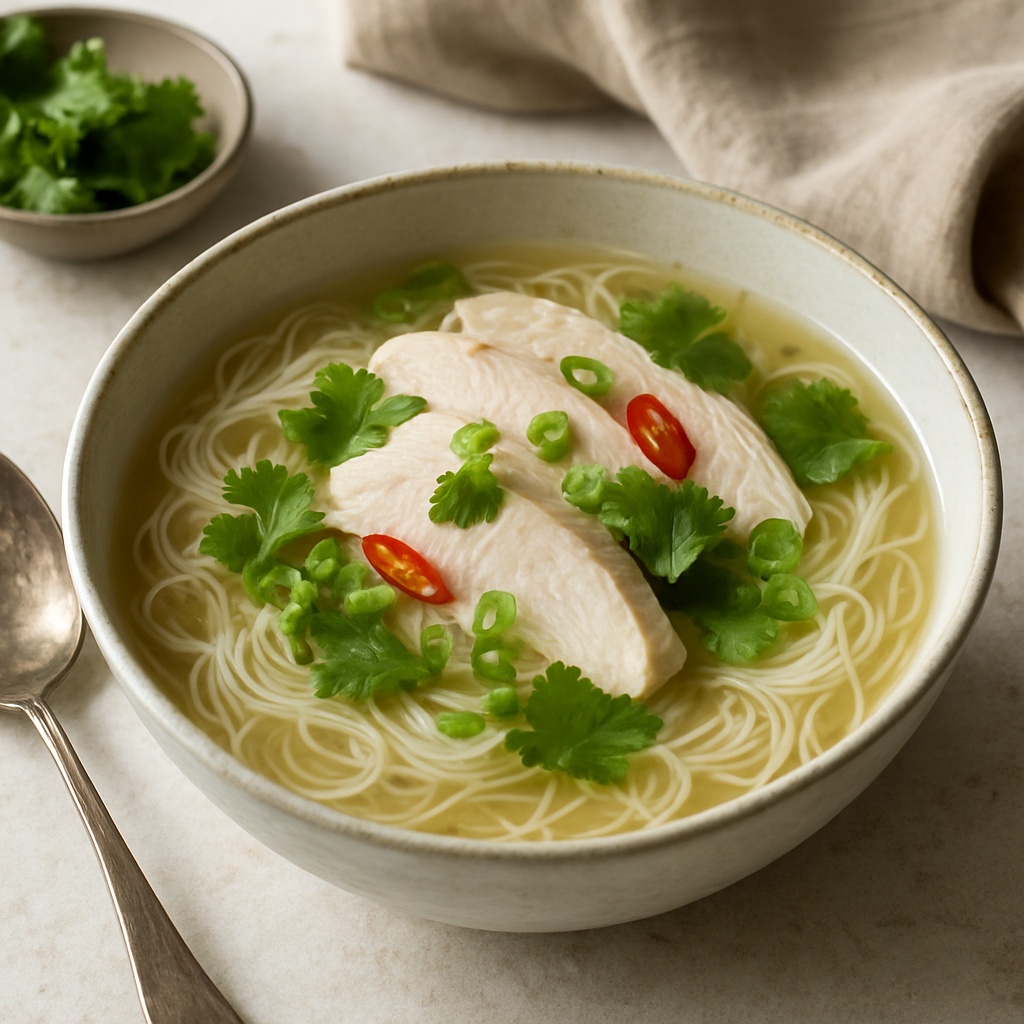
# Coconut Poached Chicken with Vermicelli Noodles and Fragrant Broth
There's something quietly satisfying about a bowl of broth-based noodles — the kind that warms you from the inside out without leaving you slumped on the sofa afterwards. This recipe takes that idea and gives it a Southeast Asian twist: gently poached chicken, silky vermicelli, and a coconut broth that's aromatic rather than heavy.
---
Why poaching chicken is worth your time
Poaching often gets overlooked in favour of roasting or pan-frying, but it's one of the most forgiving cooking methods going. You're essentially cooking the chicken low and slow in liquid, which means the proteins set gently rather than seizing up under high heat.
The result is chicken that's genuinely tender — not rubbery, not dry — and you get a flavour-packed broth as a byproduct. In this recipe, that broth becomes the heart of the dish rather than an afterthought.
Coconut milk adds body and a subtle sweetness to the poaching liquid without turning the whole thing into a rich curry sauce. The fat content in coconut milk also helps carry fat-soluble aromatics like lemongrass and ginger, so the flavour develops beautifully even in a short cooking time.
---
The ingredients
Serves 2
- 2 boneless, skinless chicken breasts (around 150–170g each)
- 400ml light coconut milk
- 400ml low-sodium chicken stock
- 1 stalk lemongrass, bruised and halved lengthways
- 3cm piece of fresh ginger, sliced into coins
- 2 garlic cloves, lightly crushed
- 1 red chilli, halved (deseeded if you prefer less heat)
- 2 kaffir lime leaves (fresh or dried)
- 1 tbsp fish sauce
- 1 tsp light soy sauce
- 1 tsp palm sugar or light brown sugar
- 130g dried vermicelli rice noodles
- 100g baby pak choi, halved lengthways
- Small handful of fresh coriander
- 2 spring onions, finely sliced
- Lime wedges, to serve
- Optional: sliced red chilli, bean sprouts, crispy shallots
---
How to make it
Step 1 — Build the broth
Pour the coconut milk and chicken stock into a medium saucepan and place over a medium heat. Add the lemongrass, ginger, garlic, chilli, and kaffir lime leaves. Bring to a gentle simmer — you want small bubbles, not a rolling boil — and let the aromatics infuse for 10 minutes.
Step 2 — Poach the chicken
Season the chicken breasts lightly with salt, then lower them into the simmering broth. Reduce the heat to low so the liquid is barely moving. Poach for 14–16 minutes, turning the chicken once halfway through, until cooked through with no pink remaining. Remove the chicken and set aside to rest.
Step 3 — Prepare the noodles
While the chicken rests, prepare the vermicelli noodles according to the packet instructions — most simply need soaking in boiling water for 3–4 minutes. Drain and divide between two deep bowls.
Step 4 — Season the broth and cook the greens
Remove the lemongrass, ginger coins, garlic, chilli, and lime leaves from the broth using tongs or a slotted spoon. Stir in the fish sauce, soy sauce, and sugar. Taste and adjust — it should be savoury, lightly sweet, and fragrant. Add the pak choi to the broth and simmer for 2 minutes until just tender but still vibrant green.
Step 5 — Slice and assemble
Slice or shred the rested chicken and arrange it over the noodles. Ladle the hot broth and pak choi generously over the top. Finish with fresh coriander, spring onions, and a squeeze of lime.
---
What makes this work nutritionally
This is the kind of bowl that hits multiple nutritional targets without feeling like it was designed in a laboratory.
Protein is the obvious anchor here. Each chicken breast provides roughly 35–40g of protein depending on size, and because poaching retains more moisture than dry-heat cooking methods, you're getting that protein without the chicken losing much of its weight. For anyone tracking macros, this matters — you're getting close to what the raw weight suggests, rather than a cooked portion that's shrunk significantly.
Vermicelli rice noodles are lower in fibre than wholegreat alternatives, but they're easy to digest, light in the bowl, and carry the broth brilliantly. A 65g dry portion (half the recipe) comes in at around 230 calories and 52g carbohydrates — a solid energy base, particularly useful if you're eating this after training.
Light coconut milk is the sensible choice here. Full-fat coconut milk is delicious, but using it in this volume would push the saturated fat content up considerably. Light coconut milk still provides enough fat to give the broth its characteristic body and mouthfeel, while keeping the overall fat content of the dish moderate.
Pak choi brings in a useful amount of vitamin C, vitamin K, and folate for very few calories. It's one of those vegetables that earns its place without you really noticing — it wilts gently into the broth and softens the overall flavour profile.
The full dish comes in at approximately 480–520 calories per serving, with around 42g protein, 52g carbohydrates, and 10–12g fat — making it genuinely macro-friendly without any compromises on flavour or satisfaction.
---
Common mistakes and how to avoid them
Boiling instead of simmering. This is the most common error with poached chicken. High heat causes the proteins to contract rapidly, squeezing out moisture and leaving you with something chalky and dry. Keep the heat low enough that you can see gentle movement in the liquid, nothing more.
Under-seasoning the broth. Coconut milk can mute seasoning. Don't be shy with the fish sauce — it brings saltiness and umami depth that transforms the broth. If you're avoiding fish products, a good quality soy sauce can do a similar job, though the flavour profile shifts slightly.
Skipping the resting step. It applies to poached chicken just as it does to roasted meat. Letting the chicken sit for 3–4 minutes before slicing allows the juices to redistribute, so you don't lose everything to the chopping board.
Overcooking the noodles. Vermicelli goes from perfectly silky to a clumped, overcooked mess faster than you'd expect. Follow the packet instructions carefully, and err on the side of slightly underdone — they'll continue to soften once the hot broth goes in.
---
Simple swaps and variations
This recipe is flexible without needing a complete rebuild.
Protein: Skin-on chicken thighs work beautifully here and add a bit more fat to the broth — just increase the poaching time to around 20–22 minutes. Firm tofu is a good plant-based alternative; press it first, then simmer in the broth for 5 minutes.
Noodles: Thin rice noodles, flat rice noodles (pad thai-style), or even glass noodles all work well. If you want to increase the fibre content, soba noodles are an option, though the flavour profile will shift noticeably.
Greens: Baby spinach, tenderstem broccoli, or sugar snap peas can all replace or supplement the pak choi. Add heartier vegetables a couple of minutes earlier to give them time to soften.
Heat level: The recipe as written has gentle background heat. For more kick, leave the seeds in the chilli, add a second one, or finish the bowls with chilli oil.
---
Practical takeaways
- Make extra broth. The coconut poaching liquid keeps well in the fridge for up to three days and freezes brilliantly. Use it as a base for a quick soup or to poach another batch of chicken midweek.
- Prep the aromatics ahead. Lemongrass, ginger, and kaffir lime leaves can all be prepped in advance and stored in the fridge or freezer, cutting the weeknight cooking time down significantly.
- Batch poach the chicken. Two extra chicken breasts poached in the same liquid adds almost no extra effort and gives you ready-to-use protein for lunches or salads across the next two days.
- Taste before you serve. The balance of salt (fish sauce, soy), sweet (sugar), and sour (lime) is personal. Take 30 seconds to adjust before ladling into the bowls.
---
If you want to hit your protein targets without the mental load of planning every meal, Macrology generates macro-perfect meal plans in seconds — https://macrology.app/signin
> Macrology tip: Add this recipe to your Macrology meal plan and the app will automatically calculate your macros for the day, adjust portion sizes to your targets, and suggest complementary meals to balance the rest of your week.
Want meals like this planned to your exact macros?
Macrology generates a personalised meal plan in seconds — breakfast, lunch, dinner and snacks, all hitting your daily targets.
Start your free 14-day trial