Baked Gnocchi with Roasted Tomatoes, Mozzarella and Basil
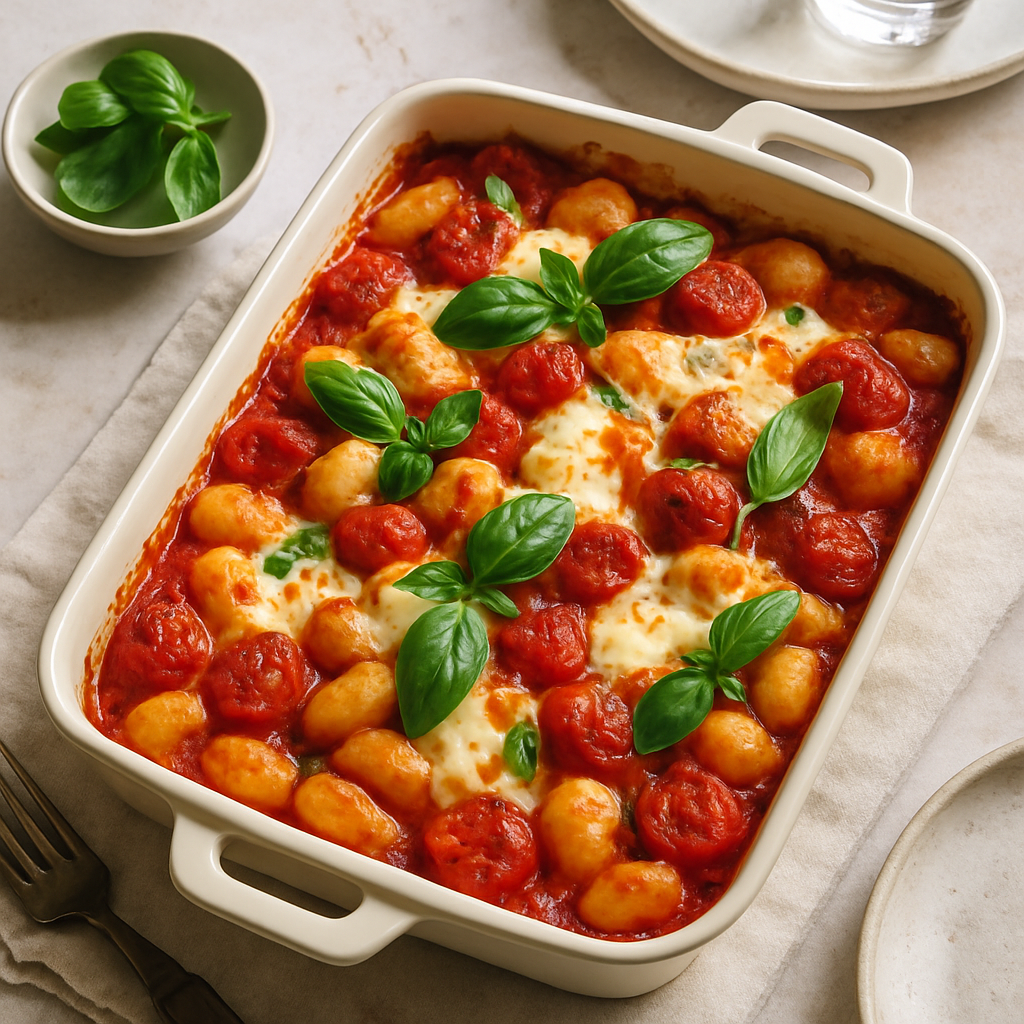
# Baked Gnocchi with Roasted Tomatoes, Mozzarella and Basil
There's something quietly brilliant about a dish that looks like it took effort but came together in under an hour. Baked gnocchi is exactly that — pillowy, golden-edged, bubbling with cheese, and far more satisfying than the sum of its parts.
What Makes Baked Gnocchi Different from Boiled
If you've only ever had gnocchi boiled and tossed in a sauce, you're missing something. When gnocchi goes into the oven, the outside crisps and caramelises while the inside stays soft and fluffy. The result is a texture that sits somewhere between a roast potato and a fresh dumpling — and it's genuinely hard to stop eating.
The trick is that you don't even need to pre-boil the gnocchi. Straight from the packet into the dish, the oven does the work. The moisture from the tomatoes steams them through as they roast, which means you get that crisp exterior without any of the gnocchi going dry or rubbery.
This method also means one fewer pot to wash, which is never a bad thing.
The Ingredients
Serves 4
- 500g gnocchi (fresh or vacuum-packed shelf-stable both work)
- 400g cherry tomatoes, halved
- 2 tablespoons olive oil
- 3 garlic cloves, thinly sliced
- 1 teaspoon dried oregano
- ½ teaspoon chilli flakes (optional)
- Salt and black pepper
- 125g ball of fresh mozzarella, torn into pieces
- A large handful of fresh basil leaves
- Parmesan, grated, to finish (optional but recommended)
How to Make It
Step 1 — Get the tomatoes going first. Preheat your oven to 200°C fan. Toss the cherry tomatoes in a large baking dish with the olive oil, garlic, oregano, chilli flakes if using, salt and pepper. Spread them out in a single layer and roast for 15 minutes until they're beginning to collapse and their edges are catching.
Step 2 — Add the gnocchi. Tip the gnocchi straight into the baking dish with the tomatoes. Give everything a good stir so the gnocchi is coated in the garlicky, tomatoey oil. Spread back into a fairly even layer. Return to the oven for another 20 minutes, stirring once halfway through.
Step 3 — Add the mozzarella. Scatter the torn mozzarella over the top and return to the oven for a final 8–10 minutes until the cheese is melted, golden in patches, and the gnocchi are starting to get some colour on their edges.
Step 4 — Finish and serve. Scatter the fresh basil over the top, grate over some Parmesan if you're using it, and serve straight from the dish. This one doesn't wait well, so eat it while it's hot.
What Makes This Work Nutritionally
This isn't a dish you need to justify, but it's worth understanding what it actually gives you, because it's more balanced than it might first appear.
Gnocchi is a carbohydrate-forward ingredient, which makes it an efficient source of energy — useful if you're active or simply need a filling weeknight dinner. Potato-based gnocchi also contains a small but meaningful amount of potassium and vitamin C compared to pasta.
Tomatoes, particularly when roasted, become a concentrated source of lycopene — a carotenoid that's actually better absorbed by the body when cooked with a fat like olive oil. The combination here is a genuinely good delivery mechanism for that compound.
Olive oil contributes monounsaturated fats and is associated with a range of positive health outcomes in the broader dietary research. Here it does double duty as a cooking medium and a flavour builder.
Mozzarella brings protein and calcium without the heaviness of a cream sauce. Fresh mozzarella has a higher moisture content than low-moisture versions, which means it melts beautifully and keeps the overall fat content more moderate.
Fresh basil isn't just garnish. It contributes volatile compounds that add genuine flavour complexity, and it contains small amounts of vitamin K and antioxidants — though at the quantities used, it's the flavour impact that matters most here.
What the Evidence Shows
The Mediterranean-style eating pattern that this dish broadly fits into has some of the strongest evidence behind it in nutrition science. Research consistently associates it with reduced risk of cardiovascular disease, better cognitive outcomes over time, and lower rates of type 2 diabetes.
A 2018 analysis published in the British Medical Journal found that closer adherence to a Mediterranean dietary pattern was associated with a significantly lower risk of cardiovascular disease. The key components aren't any individual food — it's the pattern: plenty of vegetables, olive oil as the primary fat, moderate dairy, and meals built around whole ingredients rather than ultra-processed ones.
This baked gnocchi isn't a "Mediterranean diet meal" by label, but it shares those structural features: tomatoes and olive oil as the base, fresh herbs, mozzarella in a supporting role rather than as the main event.
It's also worth noting that meals you genuinely enjoy eating tend to be ones you'll make repeatedly — and dietary consistency over time matters far more than any single dish being nutritionally optimised.
Common Variations Worth Trying
Once you've made the base recipe, there's plenty of room to move.
Add protein — a handful of cooked Italian sausage, torn and scattered in before the second roast, works brilliantly. Tinned cannellini beans stirred through with the gnocchi is a quieter option that adds substance without changing the character of the dish.
Add greens — a few large handfuls of spinach wilted in just before the mozzarella goes on, or some cavolo nero torn and tucked around the gnocchi in the final stages. Either works without making the dish feel like it's trying too hard to be healthy.
Make it more substantial — a spoonful of pesto swirled through at the end, or a dollop of ricotta added with the mozzarella, takes this somewhere richer and more luxurious.
Switch the cheese — burrata instead of mozzarella if you want to go all in. Feta crumbled over instead creates something altogether different — sharper, saltier, and excellent.
Practical Takeaways
A few things that make the difference between a good version and a great one:
Don't crowd the dish. If your baking dish is on the smaller side, use two. Gnocchi that sits in a pile steams rather than roasts, and you lose the crispy edges that make this dish worth making.
Use the best tomatoes you can. Cherry tomatoes vary enormously in flavour. In summer, fresh British cherry tomatoes are worth seeking out. In winter, small vine tomatoes or even tinned cherry tomatoes (drained well) are a better shout than watery out-of-season ones.
Let the tomatoes go first. The 15-minute head start isn't just timing — it allows them to release their liquid, concentrate their flavour, and form a light sauce that the gnocchi will soak up in the second half of cooking.
Season properly. Gnocchi is fairly bland on its own. The tomatoes and oil need enough salt to carry the whole dish, so season more generously than you might expect.
Eat it immediately. Baked gnocchi does not reheat well. The edges go soft and the cheese congeals. Make this when you're ready to eat it, not ahead of time.
---
> Macrology tip: If you want to hit your protein, carb and fat targets without doing the maths yourself, Macrology generates macro-perfect meal plans in seconds — [https://macrology.app/signin](https://macrology.app/signin)
Want meals like this planned to your exact macros?
Macrology generates a personalised meal plan in seconds — breakfast, lunch, dinner and snacks, all hitting your daily targets.
Start your free 14-day trial