Baked Cod with Romesco Sauce, Roasted Peppers and Herbed Bulgur
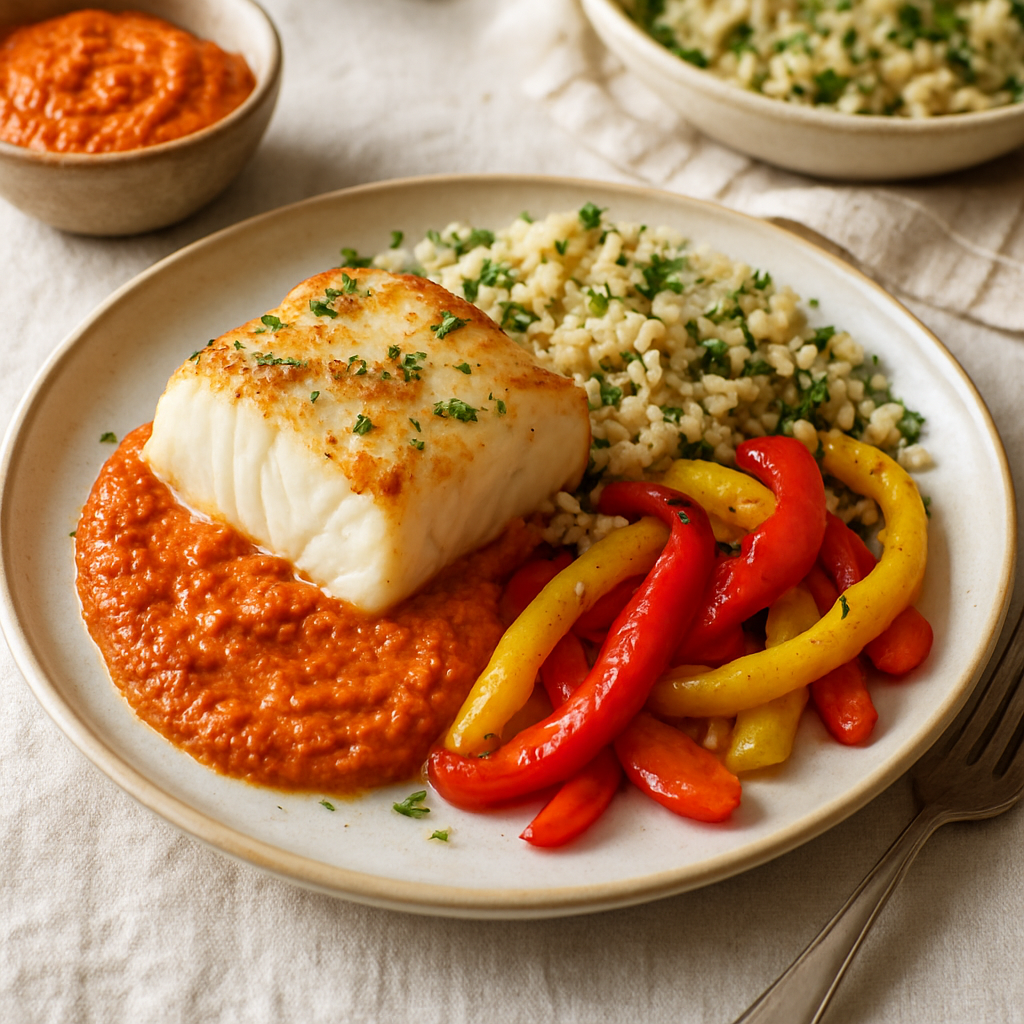
# Baked Cod with Romesco Sauce, Roasted Peppers and Herbed Bulgur
There's a particular kind of weeknight dinner that feels far more impressive than the effort it takes — and this is one of them. Flaky baked cod, a deep smoky romesco sauce, sweet roasted peppers, and nutty herbed bulgur, all on the table in under an hour.
What Is Romesco, and Why Does It Work So Well Here?
Romesco is a sauce with roots in Catalonia, traditionally made from roasted tomatoes, peppers, almonds or hazelnuts, garlic, and smoked paprika. It's rich, slightly smoky, and has a texture somewhere between a pesto and a thick purée.
What makes it such a smart pairing for white fish is contrast. Cod is mild, lean, and delicate — it needs something bold alongside it to make the dish sing. Romesco provides fat from the nuts, acidity from the tomatoes, and that distinctive smokiness from the paprika that lifts the whole plate.
It also happens to be naturally gluten-free (when made without bread, which some versions include), and it keeps well in the fridge for several days — so making a larger batch is always a good idea.
The Ingredients
For the cod: - 2 cod fillets (around 150–180g each) - 1 tbsp olive oil - Salt and black pepper - ½ tsp smoked paprika
For the romesco sauce: - 2 roasted red peppers (from a jar is absolutely fine) - 2 medium tomatoes, halved - 30g blanched almonds, lightly toasted - 1 small garlic clove - 1 tbsp sherry vinegar (or red wine vinegar) - 2 tbsp olive oil - ½ tsp smoked paprika - Salt to taste
For the roasted peppers: - 2 additional roasted red peppers, sliced into strips - 1 tsp olive oil - Fresh thyme or a pinch of dried
For the herbed bulgur: - 150g bulgur wheat - 250ml boiling water or light vegetable stock - Small bunch of flat-leaf parsley, roughly chopped - Small bunch of fresh mint, roughly chopped - Juice of half a lemon - 1 tbsp olive oil - Salt and pepper
How to Make It
Step 1 — Make the romesco. Place the tomato halves cut-side down on a baking tray with a drizzle of oil. Roast at 200°C (fan 180°C) for around 20 minutes until soft and slightly charred. Allow to cool slightly, then blend with the roasted peppers, toasted almonds, garlic, vinegar, olive oil, and smoked paprika until you reach a thick, slightly textured sauce. Season and set aside.
Step 2 — Prepare the bulgur. Pour boiling water or stock over the bulgur wheat, cover with a plate or cling film, and leave to absorb for 15–20 minutes. Fluff with a fork, then stir through the chopped herbs, lemon juice, olive oil, and seasoning. Taste and adjust — it wants to be bright and fresh.
Step 3 — Warm the roasted pepper strips. Toss the sliced peppers in a little oil and fresh thyme. Either warm them briefly in a dry pan, or place them in the oven for the last 10 minutes of cooking.
Step 4 — Bake the cod. Pat the fillets dry with kitchen paper (this helps them colour rather than steam). Season on both sides with salt, pepper, and smoked paprika. Place on a lightly oiled baking tray and roast at 200°C for 12–15 minutes, depending on thickness. The fish is ready when it flakes easily and has turned opaque throughout.
Step 5 — Assemble. Spoon a generous mound of herbed bulgur onto each plate. Lay the cod fillet on top, followed by the roasted pepper strips. Finish with a few good spoonfuls of romesco sauce alongside or over the fish. A drizzle of olive oil and a wedge of lemon to serve.
What Makes This Work Nutritionally
This dish is quietly well-balanced in a way that doesn't require any compromises on flavour.
Cod is one of the leanest sources of protein available — around 20g of protein per 100g with very little fat. It's also a useful source of iodine, a mineral many people in the UK don't get enough of, which plays a key role in thyroid function.
The romesco sauce adds healthy unsaturated fats from the almonds and olive oil, which help with the absorption of fat-soluble nutrients like vitamin E and beta-carotene — both of which are present in the peppers and tomatoes. The almonds also contribute a small but useful amount of magnesium and plant-based protein.
Bulgur wheat is a whole grain with a lower glycaemic impact than white rice or couscous, meaning it tends to support more stable energy levels after eating. It's also a reasonable source of fibre — around 5g per 100g dry weight — and provides B vitamins including folate.
The roasted peppers are genuinely high in vitamin C — red peppers in particular contain more per gram than many citrus fruits — as well as antioxidants including beta-carotene and quercetin.
Together, this plate delivers a solid hit of protein, complex carbohydrates, fibre, and a wide range of micronutrients, without anything feeling contrived or "built for nutrition." It just happens to taste good and be good for you at the same time.
What the Evidence Shows
The broad nutritional pattern of this dish — oily Mediterranean-style sauce, lean fish, whole grains, plenty of vegetables — aligns well with what large bodies of research consider a health-supporting dietary pattern.
Fish consumption, particularly lean white fish like cod, has been consistently associated with lower risk of cardiovascular disease in epidemiological studies. While oily fish (salmon, mackerel, sardines) get more attention for their omega-3 content, white fish still contributes meaningfully to overall protein intake and is often easier to cook at home without strong odours.
The Mediterranean dietary pattern more broadly — of which romesco-style cooking is very much a part — has the strongest evidence base of any dietary pattern for long-term cardiovascular health, with the PREDIMED trial (published in the New England Journal of Medicine) being one of the most cited examples. Crucially, this pattern is characterised by whole foods, olive oil, nuts, vegetables, and fish — not restriction.
Bulgur wheat, as a whole grain, is supported by evidence from studies including large UK Biobank analyses, which have linked higher whole grain intake with reduced risk of type 2 diabetes and improved gut health markers. Swapping refined grains for whole grains in everyday meals is one of the more consistently supported dietary adjustments in the nutrition literature.
Common Questions and Swaps
Can I use frozen cod? Yes — just defrost fully in the fridge overnight and pat very dry before cooking. Excess moisture is the main enemy of well-baked fish.
No almonds? Hazelnuts work equally well in the romesco. For a nut-free version, a small slice of toasted bread (traditional in some recipes) can add the body and texture.
Making it for more people? The romesco scales easily — make double and keep it in the fridge for up to five days. It works brilliantly as a dip, a pasta sauce, or spooned over roasted vegetables.
Bulgur substitutes? Quinoa or wholegrain couscous will work if that's what you have. Brown rice takes longer but is equally good nutritionally. The herbed element is what makes the grain base interesting, so don't skip the parsley and mint.
Practical Takeaways
- Toast your almonds before blending — even 3–4 minutes in a dry pan deepens the flavour of the romesco considerably.
- Roast the tomatoes rather than using them raw; the caramelisation adds sweetness and removes excess water.
- Pat the fish dry before it goes in the oven — this single step makes a real difference to the final texture.
- Season the bulgur generously — it needs lemon juice, good olive oil, and enough salt to taste alive. Under-seasoned grains are the most common issue with grain-based sides.
- Make extra romesco — it's arguably the best part of the dish and has a dozen uses through the rest of the week.
If you want to hit your protein, fibre, or calorie targets without spending hours planning meals, Macrology generates macro-perfect meal plans in seconds — https://macrology.app/signin
---
> Macrology tip: Dishes like this one — high protein, whole grain base, plenty of vegetables — are exactly what Macrology builds into personalised meal plans automatically. Log in at https://macrology.app/signin to see how it can work around your goals, your schedule, and what's actually in your fridge.
Want meals like this planned to your exact macros?
Macrology generates a personalised meal plan in seconds — breakfast, lunch, dinner and snacks, all hitting your daily targets.
Start your free 14-day trial