What Does Eating Seasonally Actually Do for Your Nutrition?
# What Does Eating Seasonally Actually Do for Your Nutrition?
There's a lot of noise around seasonal eating — farmers' markets, veg boxes, the odd smug social media post about courgettes. But strip away the aesthetic, and there's a genuinely interesting question underneath: does eating with the seasons actually change anything about the nutrition on your plate?
Why Seasonal Produce Tends to Have More Going On Nutritionally
The short answer is yes, and it comes down to time.
Once a fruit or vegetable is harvested, it begins losing nutrients — particularly water-soluble vitamins like vitamin C and folate. Produce that travels long distances or sits in cold storage for weeks arrives at your plate having already shed a notable portion of what made it nutritious in the first place.
A commonly cited example is spinach, which research suggests can lose a significant proportion of its folate content within days of being harvested, depending on storage conditions. Seasonal produce, bought locally and eaten relatively quickly, simply has less time to degrade before it reaches you.
There's also the matter of how out-of-season produce is often grown — under artificial light, in heated glasshouses, or picked unripe and ripened in transit. Ripening on the plant in natural conditions tends to produce higher concentrations of certain antioxidants and phytonutrients. It's not dramatic, but it's real.
The Variety Effect — and Why It Matters More Than You Might Think
One of the more underappreciated benefits of eating seasonally isn't about any single nutrient. It's about dietary variety over time.
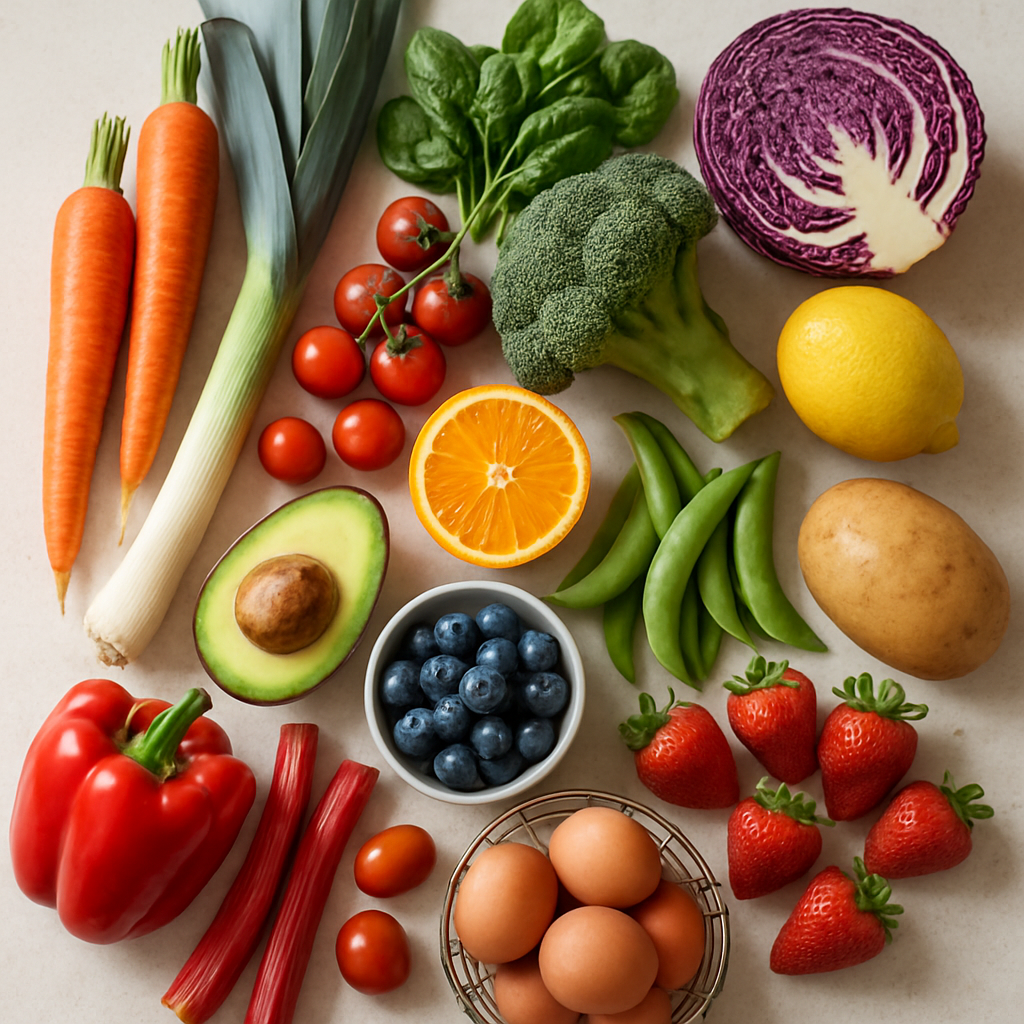
If you're eating what's actually in season, your diet naturally rotates throughout the year. Spring brings asparagus, peas, and broad beans. Summer shifts to tomatoes, courgettes, and berries. Autumn delivers squash, root vegetables, and apples. Winter leans on brassicas, leeks, and dark leafy greens.
Each of those food groups brings a different set of vitamins, minerals, and fibre types. Gut health research consistently points to dietary diversity as one of the strongest levers for a healthy microbiome — and rotating your produce through the year is a low-effort way to build that diversity without thinking too hard about it.
Eating the same handful of vegetables year-round (frozen peas and iceberg lettuce, say) means your gut microbiome gets a narrower range of inputs. Seasonal eating naturally disrupts that pattern.
What It Won't Do (Let's Be Honest)
Seasonal eating is worth doing, but it's not a nutrition overhaul on its own.
If your overall diet is missing protein, lacks sufficient calories, or is very low on variety in other ways, swapping out-of-season strawberries for in-season ones won't move the needle much. The nutritional foundations — hitting your protein targets, eating enough fibre, getting a reasonable spread of micronutrients — matter considerably more than the precise provenance of your vegetables.
It's also worth noting that frozen vegetables are often picked and frozen at peak ripeness, which locks in nutrients effectively. Frozen spinach, peas, and broccoli are genuinely good options nutritionally — sometimes better than "fresh" produce that's been sitting in a supply chain for a fortnight. Seasonal eating and frozen eating aren't opposites; they can work together.
Practical Takeaways
You don't need a veg box subscription or a farmers' market habit to eat more seasonally. A few straightforward approaches:
- Check what's in season in the UK before your weekly shop — the BBC Good Food seasonal calendar is a handy free reference
- Frozen counts — don't overlook frozen British-grown veg as a nutritionally solid, budget-friendly option
- Let the season lead the meal — rather than deciding a recipe and hunting down ingredients, start with what's available and build around it
- Notice what looks best in the supermarket — seasonal produce tends to be cheaper, more abundant, and genuinely better quality than out-of-season alternatives
The goal isn't perfection. Even swapping one or two ingredients in your regular meals to whatever's in season right now adds up to a meaningful shift in variety across a year.
If you want to build more variety and nutritional balance into your weekly meals without the planning overhead, Macrology generates macro-perfect meal plans in seconds — https://macrology.app/signin
Seasonal eating works best when it's part of a diet that's already broadly well-structured. Get the foundations right, let the seasons add the texture, and your nutrition — and your meals — will be better for it.
Want meals like this planned to your exact macros?
Macrology generates a personalised meal plan in seconds — breakfast, lunch, dinner and snacks, all hitting your daily targets.
Start your free 14-day trial