New Research: What UK Data Reveals About the Long-Term Impact of Vitamin B12 Deficiency
# New Research: What UK Data Reveals About the Long-Term Impact of Vitamin B12 Deficiency
Vitamin B12 is one of those nutrients that rarely makes headlines until something goes wrong — and by that point, the damage can already be well underway. New data emerging from UK population studies is starting to paint a clearer, and frankly more sobering, picture of just how quietly this deficiency can accumulate over years.
It's not just vegans and vegetarians who need to pay attention. The picture is more complicated, and more widespread, than most people realise.
Why B12 Is Easy to Overlook
Part of the problem is that B12 deficiency develops slowly. The body stores vitamin B12 in the liver, and those reserves can last anywhere from two to five years — sometimes longer. That means someone eating very little B12 for years might not notice any symptoms until the deficiency is already quite advanced.
The early signs — fatigue, brain fog, a vague sense of not quite feeling right — are easy to dismiss or attribute to stress, poor sleep, or a busy life. By the time more serious symptoms appear, such as numbness, memory problems, or mood disturbances, the underlying issue may have been quietly building for a long time.
This slow-burn nature is precisely what makes it so clinically tricky, and why researchers are now looking more carefully at what UK population data can tell us.
What the Evidence Shows
A significant body of evidence has emerged from UK Biobank data — one of the world's largest long-term health databases, drawing on over 500,000 participants across the UK. Analyses of this data have linked lower B12 status with increased risk of neurological decline, including poorer cognitive performance and accelerated brain ageing markers in middle-aged and older adults.
Research published in journals including Nutrients and The American Journal of Clinical Nutrition has reinforced the connection between sustained B12 deficiency and raised homocysteine levels — an amino acid that, when elevated, is associated with increased cardiovascular risk and faster cognitive deterioration. The relationship isn't simply correlational; the biological mechanism is well understood. B12 is a cofactor in the conversion of homocysteine to methionine, so when B12 is low, homocysteine accumulates.
UK-specific data also highlights a concern around older adults, where absorption of B12 from food declines due to reduced production of intrinsic factor — a protein made in the stomach that's essential for B12 uptake. This means that even people eating plenty of meat, fish, and dairy can become deficient as they age, without ever changing their diet.
Who's Most at Risk in the UK?
The groups facing the highest risk of B12 deficiency in the UK population span a wider range than the typical "just vegans" narrative suggests.
Older adults are consistently flagged in UK data as under-recognised for B12 deficiency, largely due to the absorption issue described above. People following plant-based diets face risk because B12 occurs naturally only in animal products — but here the picture is nuanced, since many plant-based milks and cereals in the UK are now fortified. The question is whether those fortification levels are sufficient and consistent enough to maintain adequate status long-term.
People with type 2 diabetes taking metformin are another overlooked group. Metformin — one of the most commonly prescribed medications in the UK — is known to reduce B12 absorption over time. NICE guidelines recommend monitoring B12 in long-term metformin users, but in practice this doesn't always happen systematically.
Those with gastrointestinal conditions — including Crohn's disease, coeliac disease, and atrophic gastritis — also face elevated risk due to impaired absorption. And people with a history of gastric surgery, including increasingly common bariatric procedures, may have significantly reduced capacity to absorb dietary B12.
The Neurological Connection
Perhaps the most striking finding from recent UK research is the strength of the link between long-term B12 insufficiency and neurological outcomes. This goes beyond the well-known "subacute combined degeneration of the spinal cord" seen in severe deficiency — serious but relatively rare. What researchers are now examining is the subtler end of the spectrum: the cognitive and mood effects that occur well before anyone might seek medical attention.
Data from older UK cohorts suggests that even "low normal" B12 levels — technically within the accepted reference range — may be associated with worse cognitive outcomes over time compared to higher B12 levels. This has prompted some researchers to argue that current reference ranges may be set too low, and that what counts as "sufficient" may need revisiting.
There is also emerging evidence around depression and B12 status. While B12 deficiency is unlikely to be the sole cause of depression, it plays a role in the synthesis of neurotransmitters including serotonin and dopamine. Several studies, including analyses drawing on UK primary care data, have found associations between low B12 and depressive symptoms — particularly in older adults.
Common Misconceptions Worth Clearing Up
One of the most persistent myths is that eating some meat or dairy means you're covered. While animal products are the primary dietary source of B12, the amount that actually gets absorbed depends enormously on gut health, age, and medication use. Consuming B12-containing foods is necessary but not always sufficient.
Another common misconception is that supplements always fix the problem quickly. For people whose deficiency stems from poor absorption rather than low intake — as is the case with pernicious anaemia or severe gastric issues — oral supplements may not be effective, and injectable B12 (hydroxocobalamin) is often required instead.
It's also worth noting that blood tests don't tell the whole story. Standard serum B12 tests can miss deficiency, particularly in the early stages. Functional markers like methylmalonic acid (MMA) and holotranscobalamin (active B12) are more sensitive indicators, but they aren't routinely available through standard NHS testing for most people.
What This Means for How You Eat
None of this is meant to be alarming — B12 deficiency is largely preventable, and for most people, paying attention to a few key things is genuinely enough.
For people eating animal products regularly, the main thing to be aware of is that absorption can change over time, particularly as you get older or if you're on long-term medication. If you're over 50, it's worth asking your GP about B12 testing as part of a routine check.
For people on plant-based diets, relying on fortified foods alone may not be sufficient depending on variety and portion sizes — a B12 supplement is generally considered the most reliable route. The NHS recommends a daily supplement for vegans, and current evidence supports a dose of around 10 micrograms daily or a higher dose less frequently (around 2,000 micrograms weekly), as absorption via passive diffusion is more effective in larger, less frequent doses.
If you're taking metformin or have a digestive condition that affects absorption, it's worth specifically mentioning B12 to whoever manages your care — it's easy for this to slip through the gaps in routine appointments.
Practical Takeaways
Here's what you can actually do with all of this:
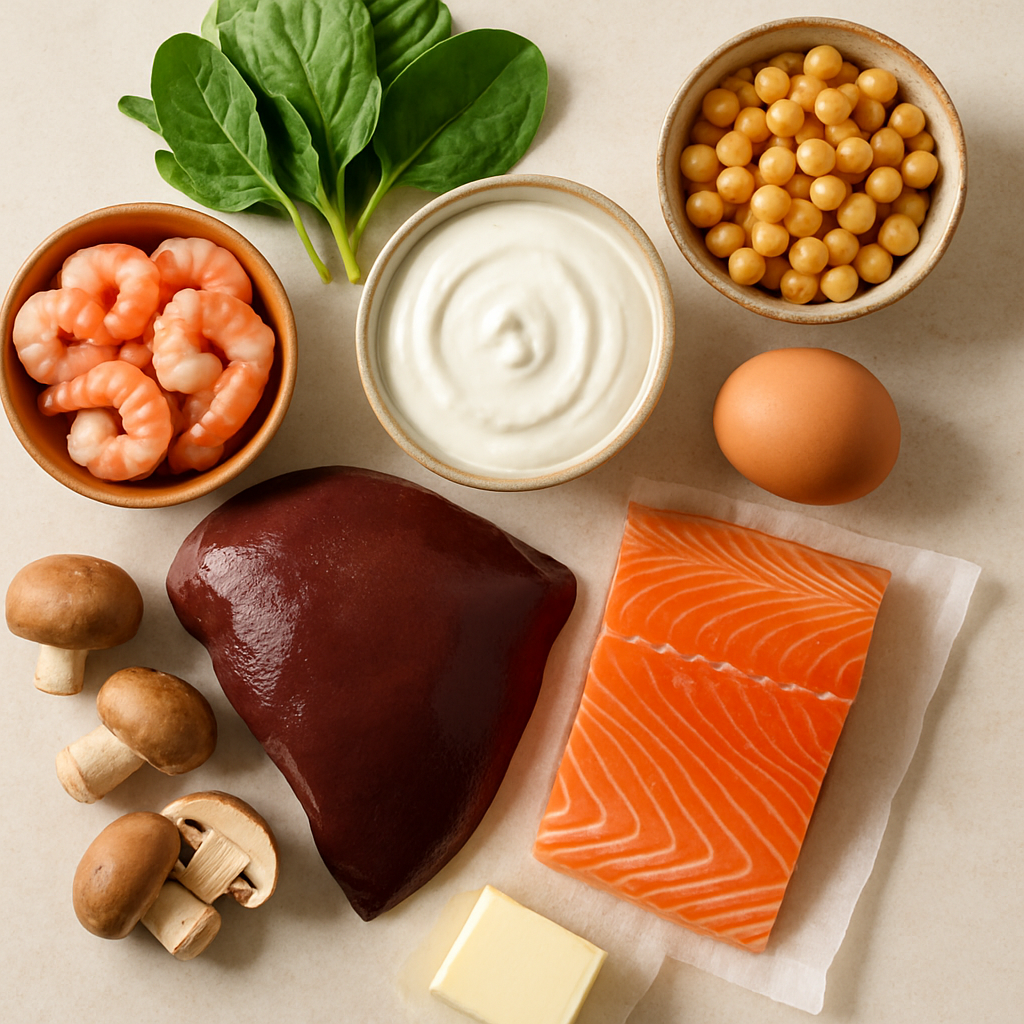
- Know your sources. The richest dietary sources of B12 include clams, liver, sardines, beef, trout, salmon, eggs, and dairy. For fortified plant-based options, check the label — you're looking for at least 1.5–2.5 micrograms per serving.
- Don't assume your levels are fine. If you've been eating a mostly plant-based diet for more than a year, or you're over 50, or you're on metformin, it's worth getting a blood test. Ask your GP specifically about B12 rather than waiting for it to appear on a general panel.
- Think about the long game. B12 deficiency is one of those things where the consequences show up years after the cause. Building consistent intake now — whether through diet, fortified foods, or supplements — is genuinely protective.
- Supplements work for most people. Cyanocobalamin and methylcobalamin are both effective for people without absorption issues. If you're uncertain which is right for your situation, your GP or a registered dietitian can help.
If you want to make sure your day-to-day eating actually hits your nutritional targets — B12 included — Macrology generates macro-perfect meal plans in seconds — https://macrology.app/signin
Want meals like this planned to your exact macros?
Macrology generates a personalised meal plan in seconds — breakfast, lunch, dinner and snacks, all hitting your daily targets.
Start your free 14-day trialMore from news
New Research: What UK Studies Reveal About the Link Between Food Delivery App Usage and Dietary Quality
7 min readNew Research: What UK Studies Reveal About the Link Between Food Environment at Home and Children's Eating Habits
7 min readNew Research: What UK Studies Reveal About the Link Between Cooking Frequency at Home and Overall Diet Quality
7 min read