New Research: Why Your Gut Health Depends on Fibre
What the Latest Research Actually Shows
Most of us know fibre is "good for you" in the same vague way we know we're supposed to drink more water — but a growing body of research is revealing just how central it is to almost every aspect of how your body functions. It turns out your gut bacteria have quite a lot to say about it.
A wave of studies over the past few years has significantly deepened our understanding of the gut microbiome — the trillions of bacteria, fungi, and other microorganisms living in your digestive tract. What's becoming increasingly clear is that fibre is the primary fuel source for beneficial gut bacteria, and without enough of it, those bacterial communities start to thin out.
Research published in Cell Host & Microbe found that low-fibre diets led to a measurable reduction in microbial diversity within just a few days. More strikingly, some of that diversity didn't fully recover when fibre was reintroduced. A separate large-scale study from the Sonnenburg Lab at Stanford reinforced this, suggesting that dietary diversity — particularly from plant foods — is one of the strongest predictors of a healthy microbiome.
This matters because microbial diversity is increasingly linked to outcomes far beyond digestion, including immune function, inflammation levels, and even mood regulation through the gut-brain axis.
The Difference Between Types of Fibre
Not all fibre does the same job, and this is where things get genuinely useful. There are two main categories worth understanding.
Soluble fibre dissolves in water to form a gel-like substance. It slows digestion, helps regulate blood sugar, and is fermented by gut bacteria to produce short-chain fatty acids (SCFAs) — compounds that feed the cells lining your colon and help reduce inflammation. Good sources include oats, lentils, apples, and flaxseed.
Insoluble fibre doesn't dissolve — it adds bulk to stool and helps keep things moving. Wholegrains, nuts, and the skins of vegetables are rich in it.
The real benefit, research suggests, comes from getting both types consistently, rather than leaning heavily on one. Variety in your fibre sources means a wider range of bacterial species get fed, which supports that all-important diversity.
Why Most People in the UK Aren't Getting Enough
The recommended fibre intake for adults in the UK is 30g per day, according to the NHS and the British Nutrition Foundation. The average adult is currently eating closer to 18g — barely more than half the target.
This gap exists largely because ultra-processed foods, which make up a substantial portion of many people's diets, tend to be low in fibre by nature of how they're manufactured. White bread, packaged snacks, and many ready meals have had much of their natural fibre stripped out during processing.
Closing that gap doesn't require an overhaul. Small, consistent additions add up quickly — a portion of lentils with dinner, swapping white bread for wholemeal, snacking on fruit rather than something processed. These aren't dramatic changes, but over time they shift your daily intake meaningfully.
What Fibre Does Beyond Your Gut
The research goes further than microbiome health alone. Higher fibre intakes are consistently associated with a reduced risk of type 2 diabetes, cardiovascular disease, and colorectal cancer — three of the most common chronic conditions in the UK. A landmark review published in The Lancet in 2019, which analysed data from nearly 250 studies, found that people eating the most fibre had a 15–30% lower risk of dying from heart disease or stroke compared to those eating the least.
SCFAs produced during fibre fermentation also appear to play a role in appetite regulation, helping with satiety signals in a way that has nothing to do with restriction or willpower — simply the body responding to what it's being fed.
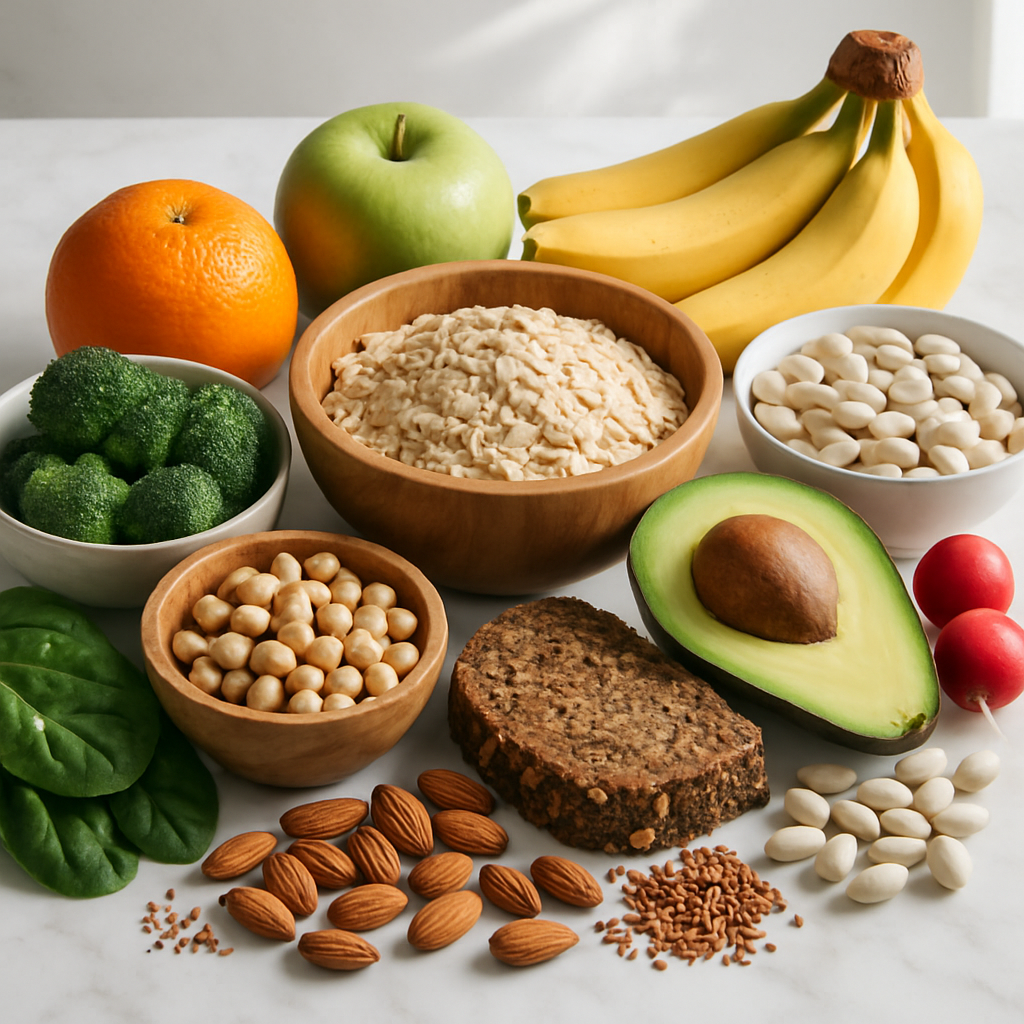
Getting to 30g of fibre a day is more straightforward than it sounds once you know what's in your food. Stack a few of the following across the day and you're already well on your way:
- Porridge (40g oats): ~3g fibre
- Two slices wholemeal bread: ~4g fibre
- Portion of cooked lentils (120g): ~5g fibre
- Medium apple with skin: ~3g fibre
- Broccoli (80g portion): ~2.5g fibre
If you want to hit your fibre targets without having to count everything manually, Macrology generates macro-perfect meal plans in seconds — https://macrology.app/signin
Want meals like this planned to your exact macros?
Macrology generates a personalised meal plan in seconds — breakfast, lunch, dinner and snacks, all hitting your daily targets.
Start your free 14-day trialMore from news
New Research: What UK Studies Reveal About the Link Between Food Delivery App Usage and Dietary Quality
7 min readNew Research: What UK Studies Reveal About the Link Between Food Environment at Home and Children's Eating Habits
7 min readNew Research: What UK Studies Reveal About the Link Between Cooking Frequency at Home and Overall Diet Quality
7 min read